
Enjoy With Care
Notes on RM x SFMOMA’s Between You and Me
By Amélie Rae Mayumi
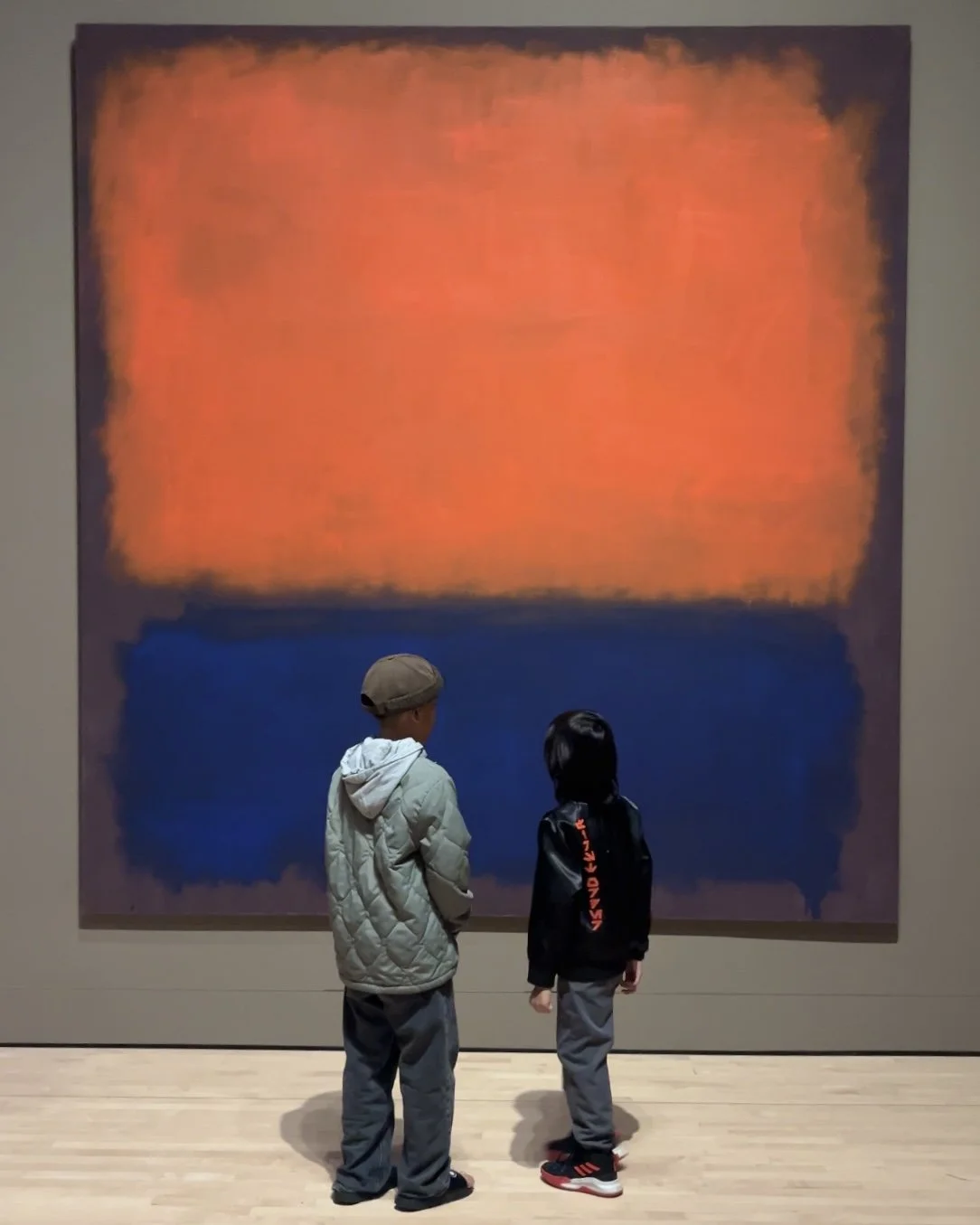
Mark Rothko, No. 14, 1960 (1960). San Francisco Museum of Modern Art. Photography © The Noun.
Give an archaeologist a single shard of celadon and she can tell you which kiln fired it, which road carried it, and why a fishing village became a port. A silver hairpin speaks to marriage and rank, a merchant’s ledger to debt, the coins in a traveler’s pocket to the price of rice the year he set out. Whole cities, timelines and cultures come back to us this way, piece by piece, through what people chose to keep.
Museums have been part of my life for more than three decades, since childhood. I have thought about the exhibition, the theme, the museum and the artist. Not once did I think about the curator. That’s admittedly a bit ignorant of me, especially considering how often the words curate, curated and curation turn up in my own vocabulary and writing. I knew the role existed, yet standing in front of the work, I never credited the person behind it. RM x SFMOMA: Between You and Me realigned that thought process because here, you meet the curators first.
Creating, collecting, and curating are three different acts. An artist creates in answer to something—whether a commission or a feeling that keeps her up at night. A collector lives with what others have created and keeps it because it holds his attention long after the first encounter. A curator decides how a stranger should meet those works, shaping the experience from the first wall to the last. RM has practiced the first act in public for thirteen years as the songwriter, rapper and leader of BTS, the South Korean group credited as the biggest band in the world. Between You and Me is the first museum exhibition of his collection, curated with SFMOMA’s Hyoeun Kim and América Castillo. Nearly 180 works fill Floor 7, 142 from his own collection and 36 from SFMOMA’s, spanning what Hyoeun Kim calls “the broader trajectory of art in Korea, from the 6th century to the present.” Many came straight off the walls of his home. Few things, he has said, reveal a person as honestly as a collection built over many years.
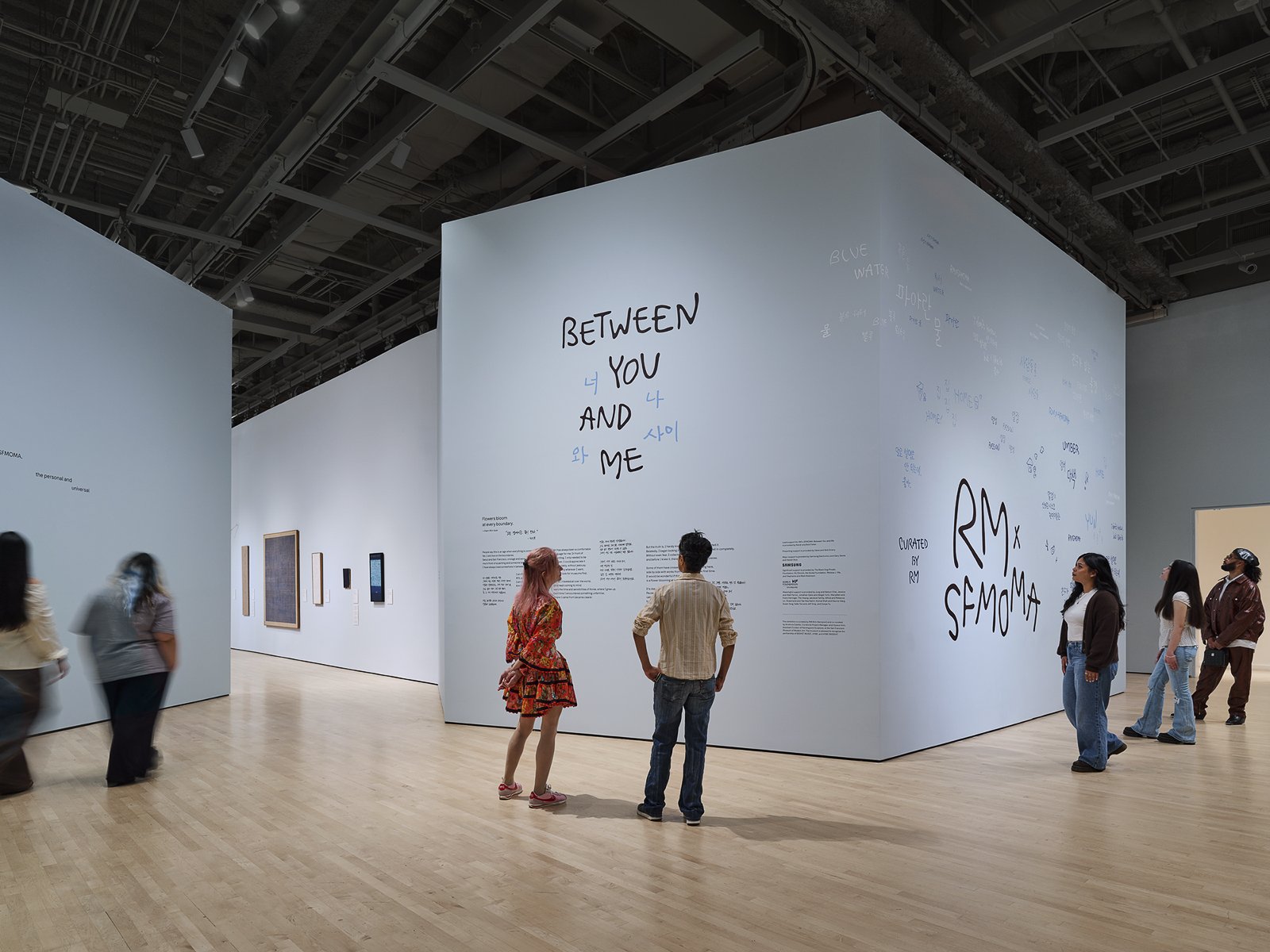
RM x SFMOMA: Between You and Me, installation view, San Francisco Museum of Modern Art, 2026. Photograph by Matthew Millman.
It is rare for an artist to share other people’s art instead of his own and rarer still from someone this visible. BTS’s ARIRANG tour has brought the group before millions of concertgoers since April, while their comeback concert drew 18.4 million Netflix views within its first 24 hours. ARMY, the band’s global fanbase, even coined a word from his birth name, Kim Namjoon, for how he spends his time off: Namjooning, for his museums, bookshops, bike rides (now car rides), long walks and solitude. RM calls the exhibition “a long self-introduction.” He isn’t entirely at ease with it. At the press preview, he wondered aloud whether it’s right to own so many things he doesn’t need. The same unease surfaces in the audio guide. In Home 집, the gallery built like a living room, he admits one painting makes him uncomfortable. He likes it anyway, appreciating the reason behind the discomfort.
Our first issue, No. 001 The Archivist, maps Namjooning-worthy stops in every city on the tour—a cultural experience, a bookstore, a gallery and a nature walk for each—starting on page 112. Free to read online here.
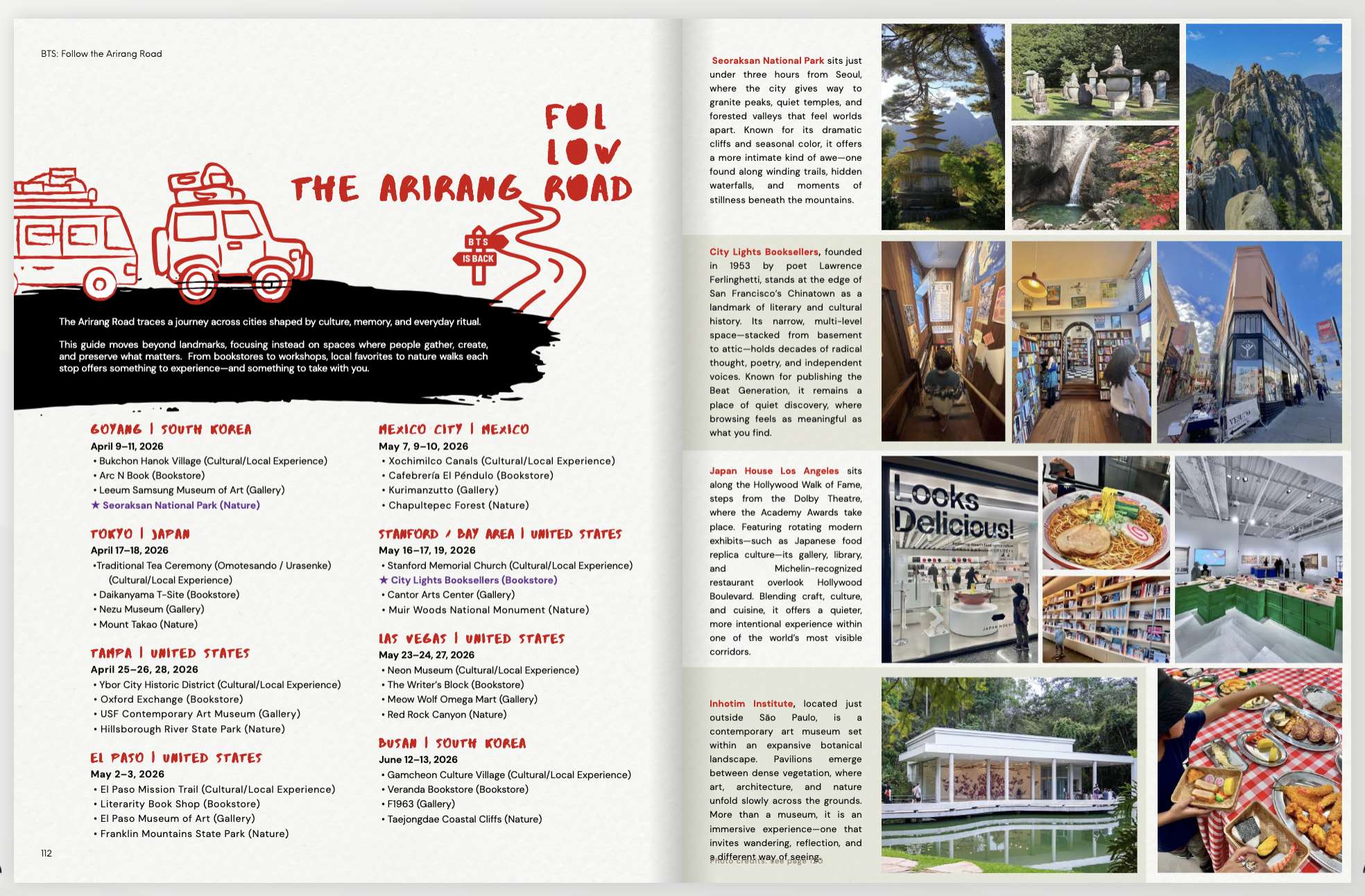
Follow the Arirang Road, from The Noun's No. 001 The Archivist. A cultural guide to the cities of BTS's ARIRANG world tour, exploring the places, traditions, and experiences that give each destination its character. Pages 112-113 (2 of 4 pages shown)
I’m not famous, yet I still write under a pen name because the way I observe feels exposing. Since college, a recorder has gone everywhere with me (currently, my phone’s voice memos), a habit borrowed from Yoko, the ad executive in Survive Style 5+. What it catches is unfiltered: notes on what I’m seeing, random ideas and inspirations, things to research later, memories pulled up in the moment. It’s closer to raw stone than something polished, too chaotic to comfortably hand to someone else to hear.
RM’s audio guide has that same unpolished grain. He laughs mid-thought. Some tracks stop without a closing line, the way real conversations do, nothing like the tidy scripts most guides follow. That’s by design: the guide was built from two separate unscripted interviews, one in Korean and one in English, rather than translated. Reading an artist’s words on a wall is one thing—hearing a collector say them in his own voice, as if he were beside you walking through his own home and taking in the works SFMOMA’s Hyoeun Kim and América Castillo chose to place beside his, is what makes the title Between You and Me feel literal. (add in produced by Hyoeyn Kim here)
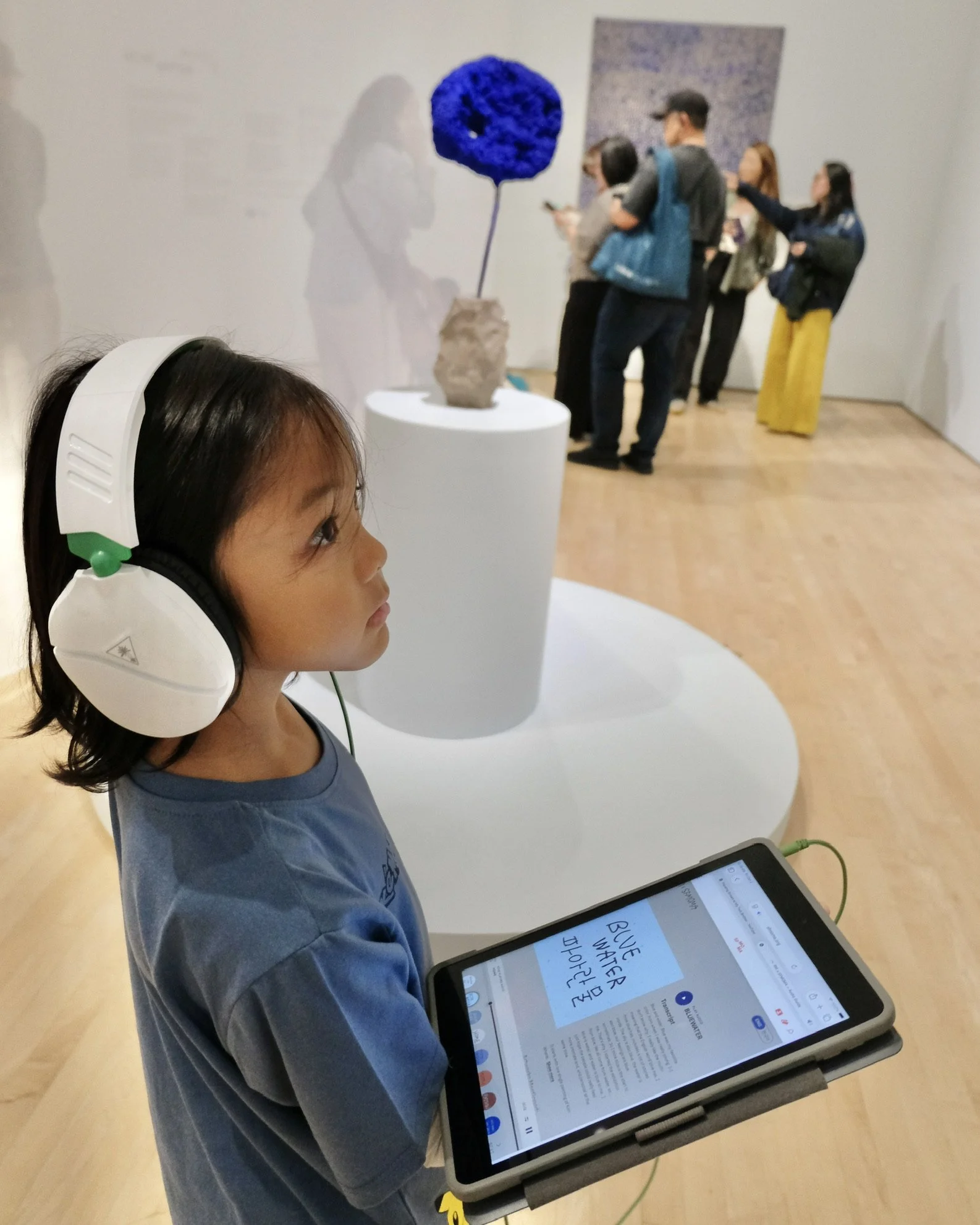
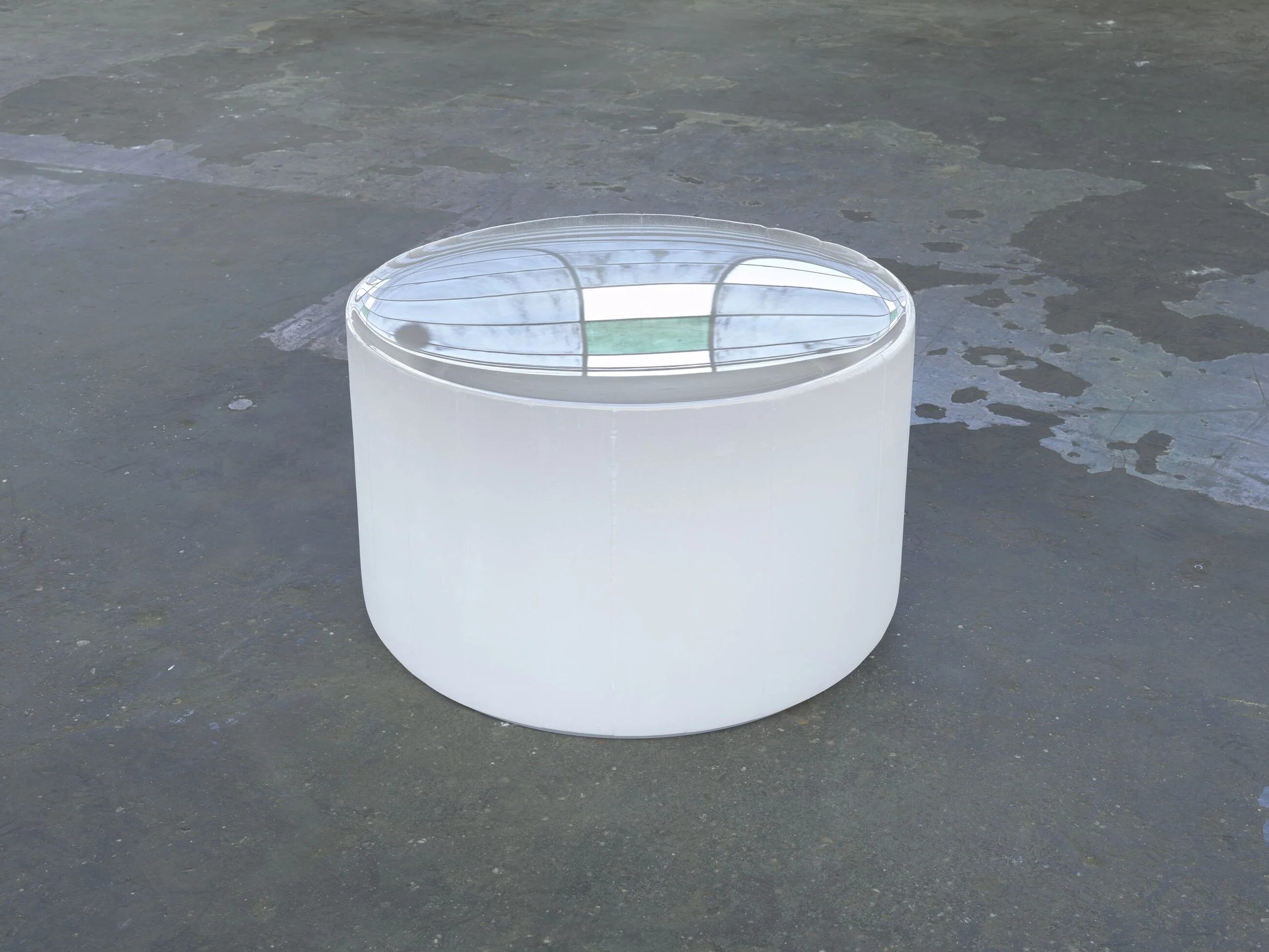
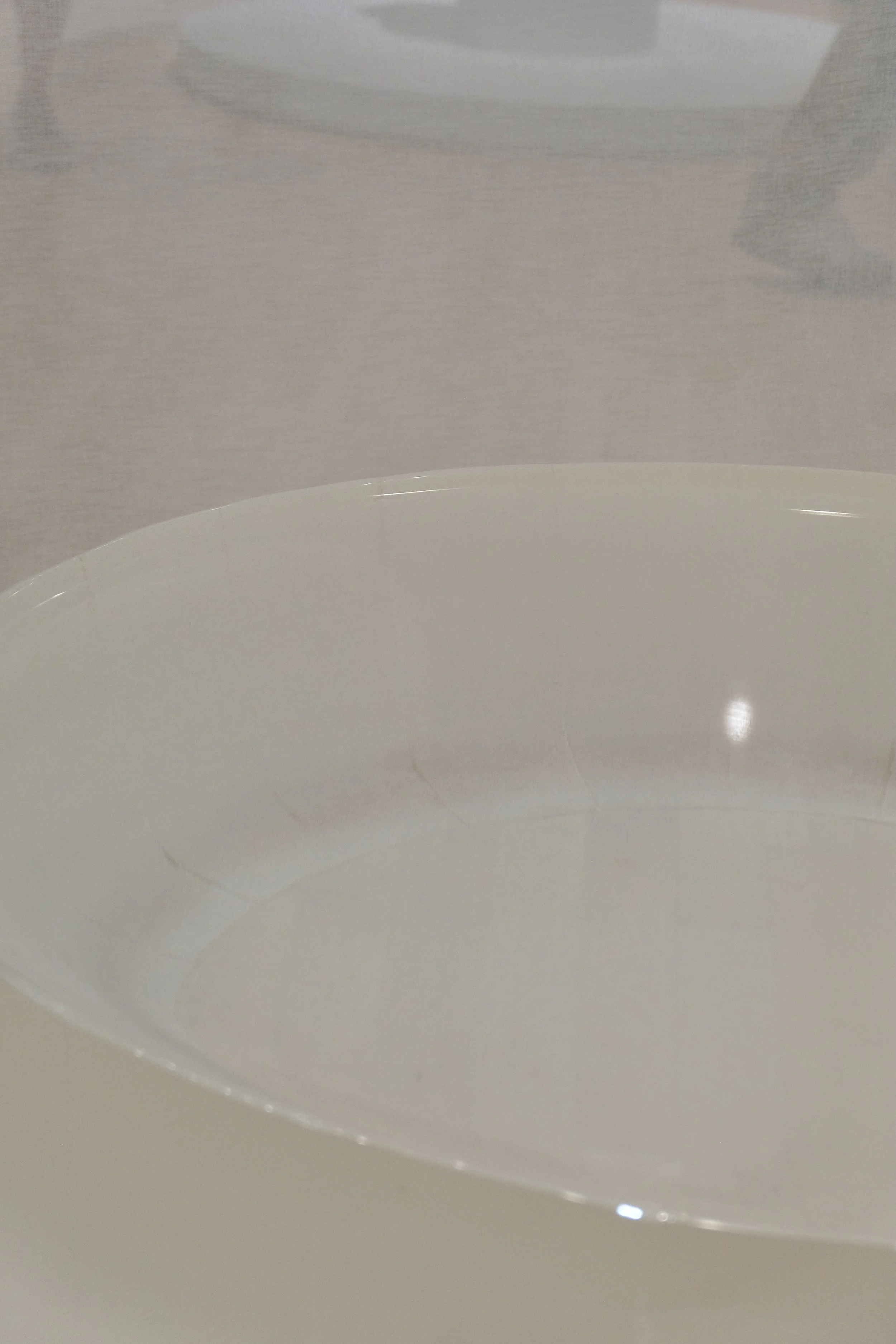
Yves Klein, Éponge (SE251) (Sponge [SE 251]) (1961), in Blue Water. SFMOMA. Photography © The Noun.
I don’t mention my background without cause. For twenty years my work, from fashion to brand experiences to production sets, has centered on how a person feels wearing or walking through something someone else designed. Good design works like good clothing: you typically only notice you’re wearing it when something interrupts what you expected—a pain point, a malfunction. Taking in nearly 180 works in an hour or two doesn’t happen by accident. Every bit of ease visitors feel walking through it was built behind the scenes. Where a work resists easy understanding, that’s by design too. Those fields (industries?)also train you to research a person, to get inside their head so you can shape an experience for them. I did it with RM by default and didn’t expect what came with it.
It was the feeling of choosing the movie for a gathering or the playlist for a group road trip, even among family, then watching everyone’s faces, hoping they love it and hoping they’ll trust you with the choice again. That feeling only comes from caring whether people choose to come back and spend time with you again—or, fittingly, in the title of one of RM’s own songs, “Come back to me.” His audio guide carries that same feeling. His lyrics already reveal how he thinks. Here, what he values and how he feels about it sit on full display beside the things he prizes. Listening, I felt that vulnerability—and a tightness in my chest on his behalf.
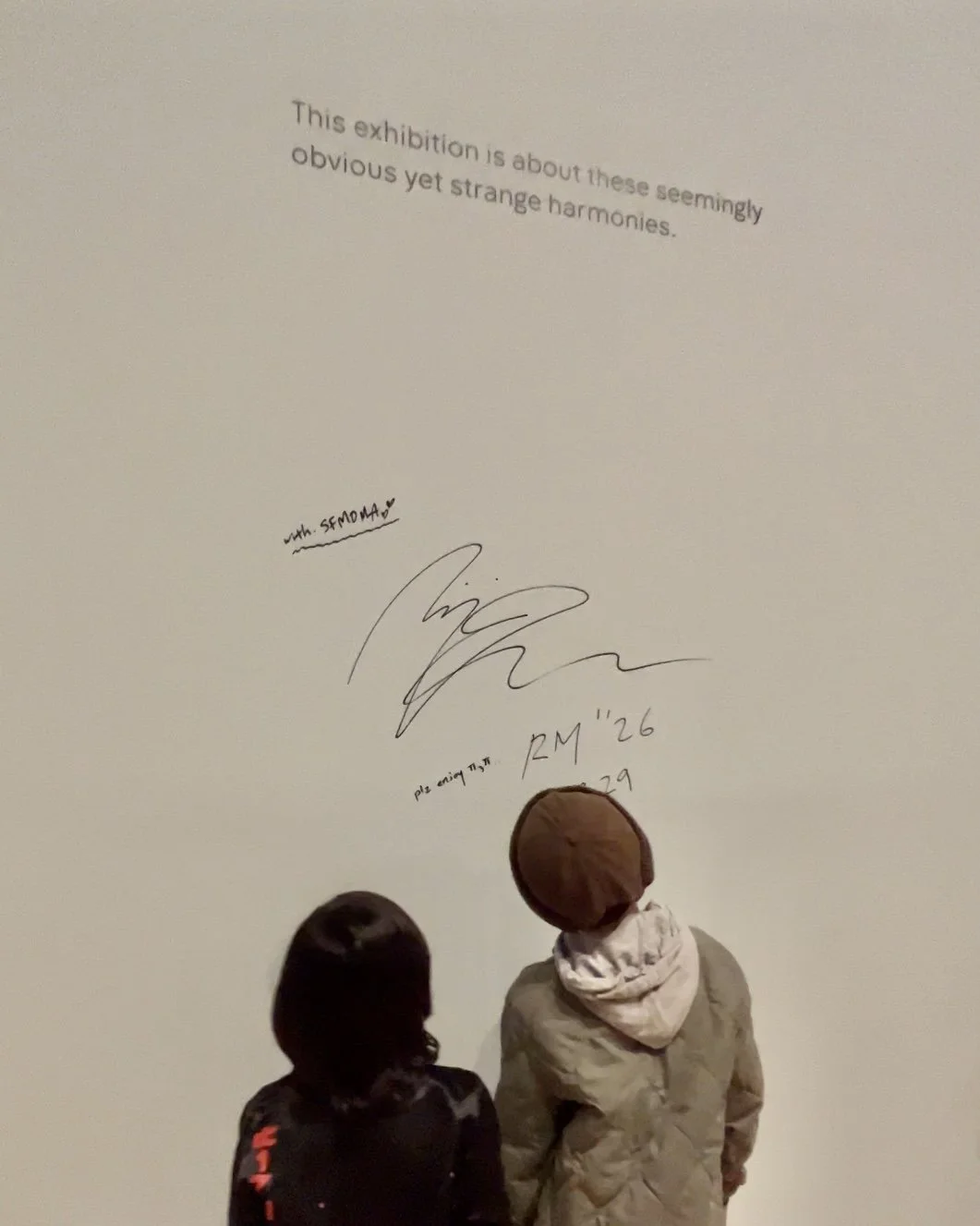
RM's handwritten message, RM x SFMOMA: Between You and Me. Photography © The Noun.
Now picture it at his scale. He’s mid-tour, playing to millions, his face on screens around the world. One floor in one corner of downtown San Francisco now holds his thoughts and observations alongside keepsakes from his own home, open to anyone with a ticket. Only after I walked away did I realize his face appears nowhere on that floor, not in the galleries and not even in the zine sold in the shop. For thirteen years his face has been something fans collect, photocards most of all. “I don’t keep photos of myself at home,” he writes in People 사람들. “Onstage, I’m constantly under countless watching eyes, always becoming a ‘face.’” As curator, he fills the rooms with other artists and other faces for us to meet and leaves himself only in his handwriting and his voice.
The Curators’ Hand
His openness made me curious about the other two people who shaped these rooms. How did Hyoeun Kim and América Castillo find works in SFMOMA’s collection that could converse with his?
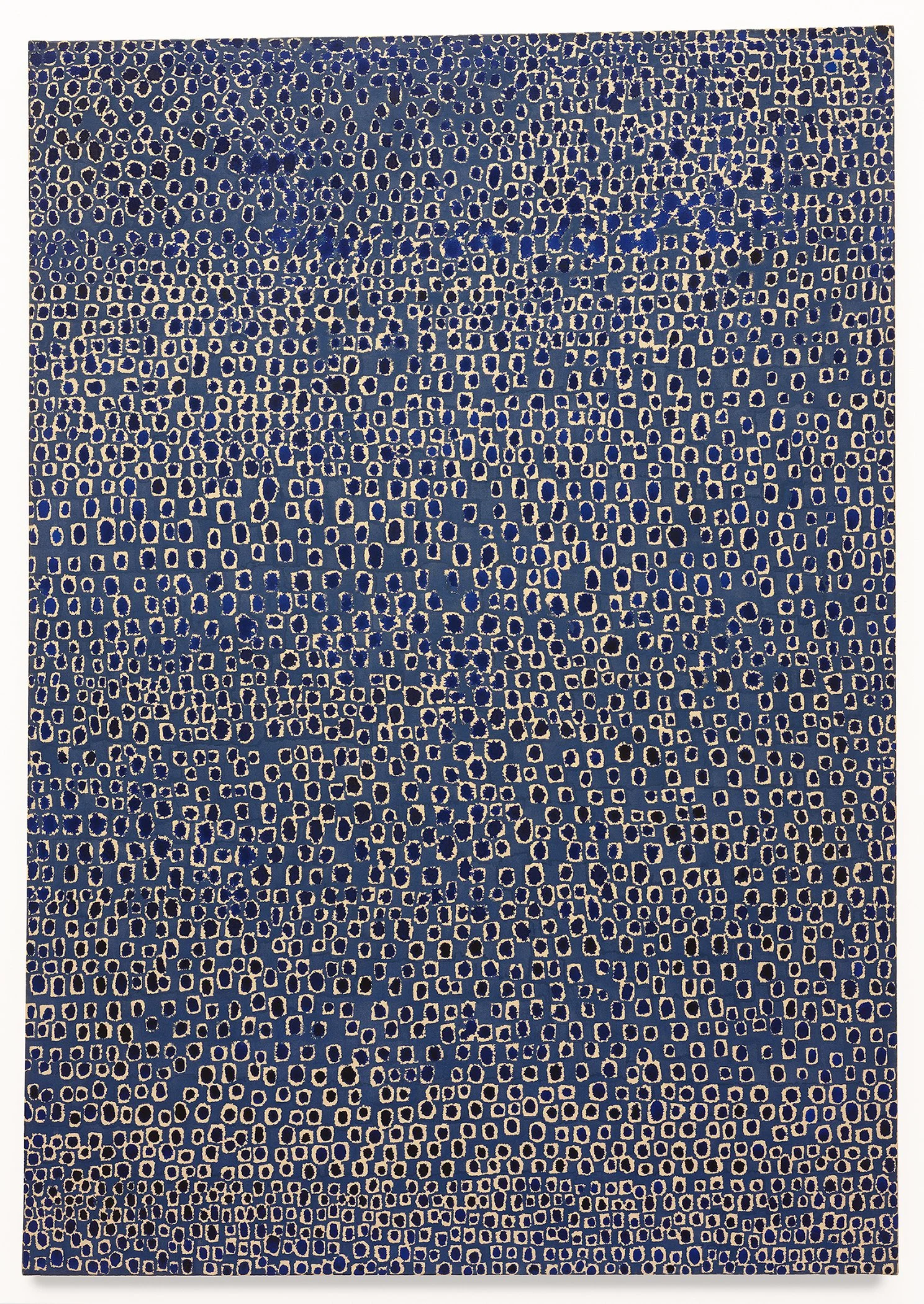
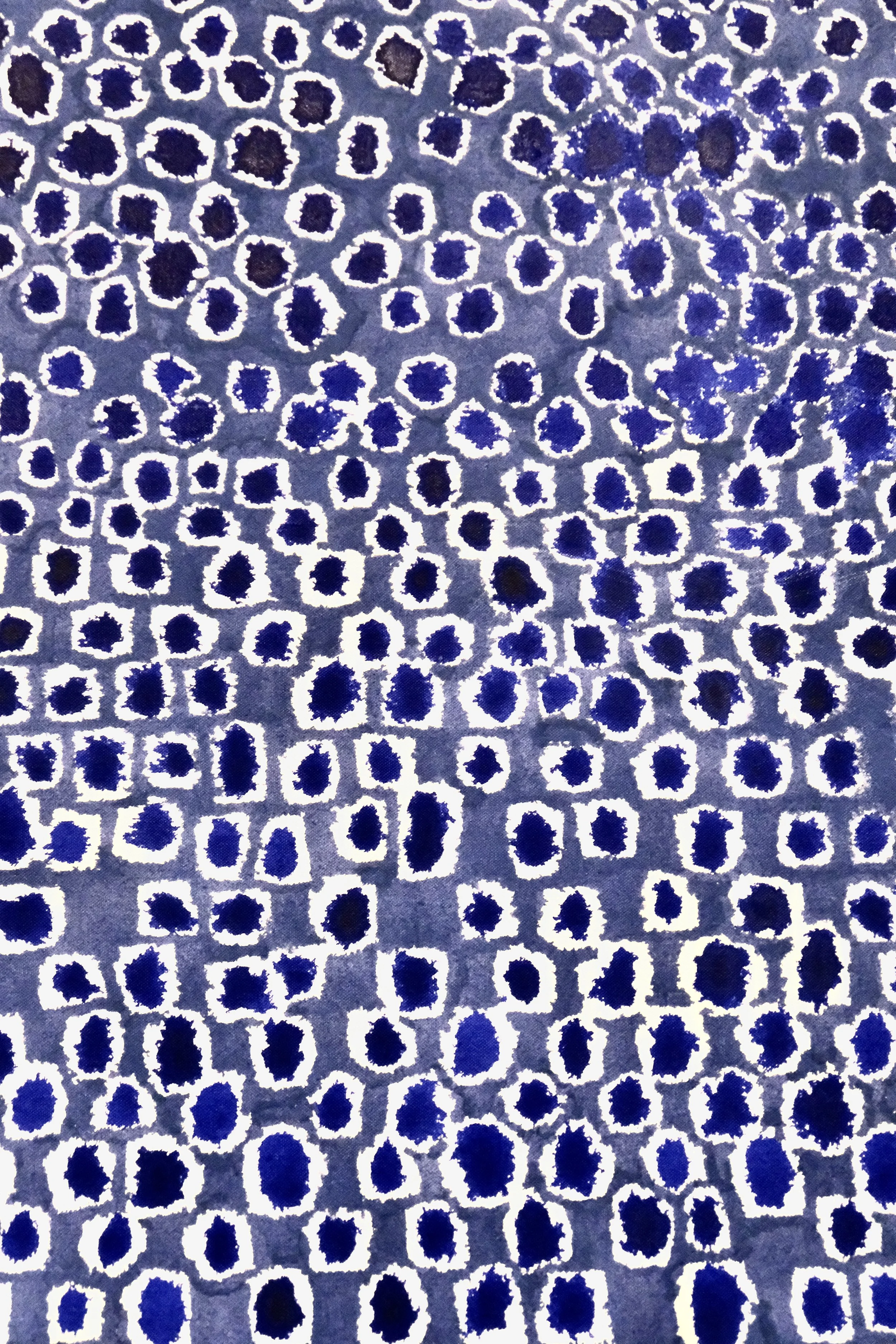
The most meaningful pairings are reunions. Kim Whanki painted 26-I-70 #141 and 15-VII-70 #181 six months apart, in New York, in 1970. The first entered SFMOMA’s collection in 1979, five years after his death, through his widow, Mrs. Kim Whanki. The second belongs to RM. In Blue Water 파아란 물, they now share a room. Nam June Paik repeats the pattern. SFMOMA holds his 1978 ink drawing of a TV Buddha. RM owns the sculpture, Enlightenment Compressed (1994). Near the end, Yun Hyong-keun hangs with Mark Rothko, a pairing RM wanted so he could see how the two speak to each other. Castillo calls the exhibition “an invitation for visitors to trust their own perspective.” Mine has changed, simply because here I heard from the curators first. Curators usually stay behind the scenes. I hope more museums let us hear their thoughts
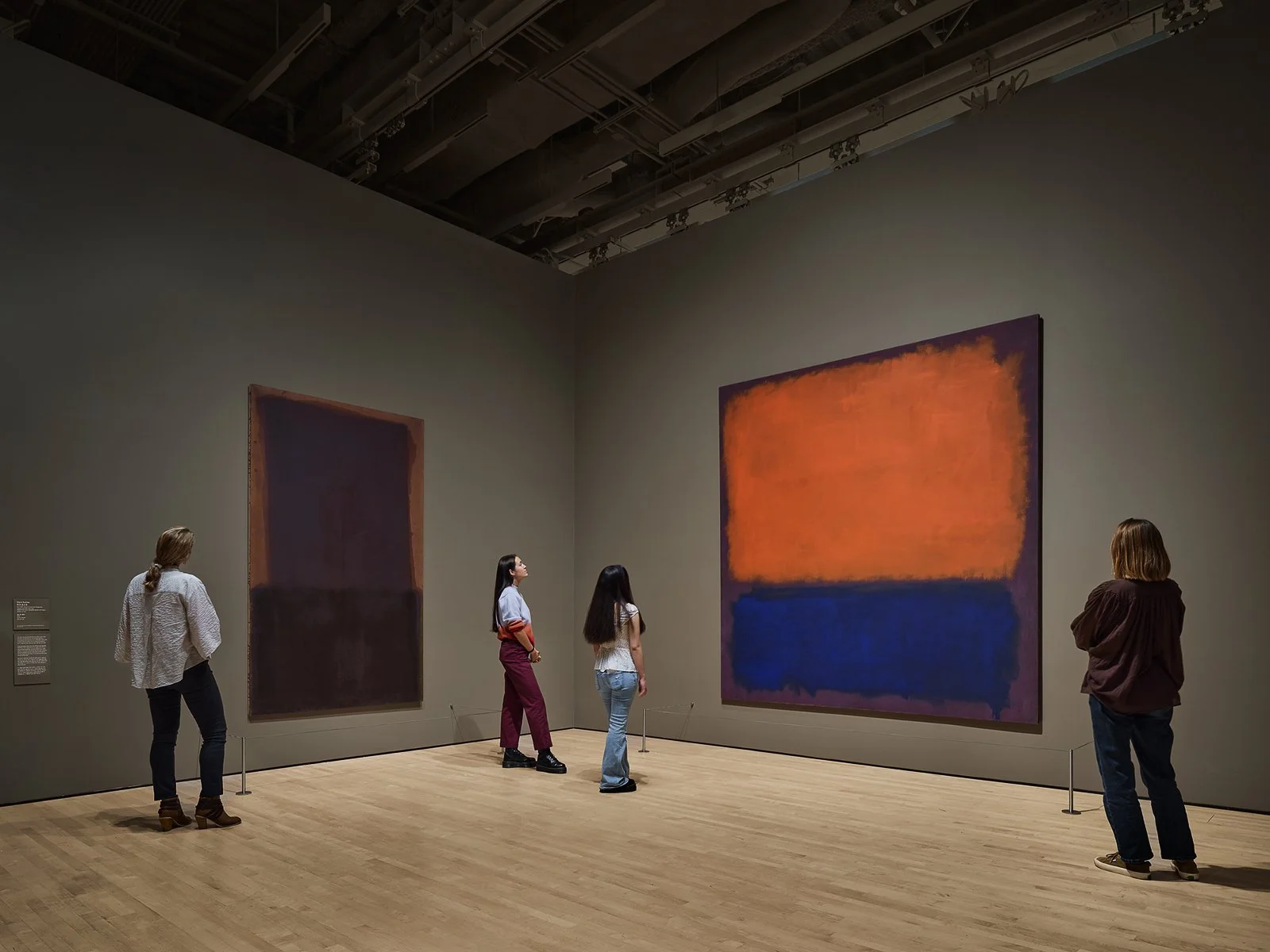
RM x SFMOMA: Between You and Me, installation view featuring works by Yun Hyong-keun and Mark Rothko. Photograph by Matthew Millman.
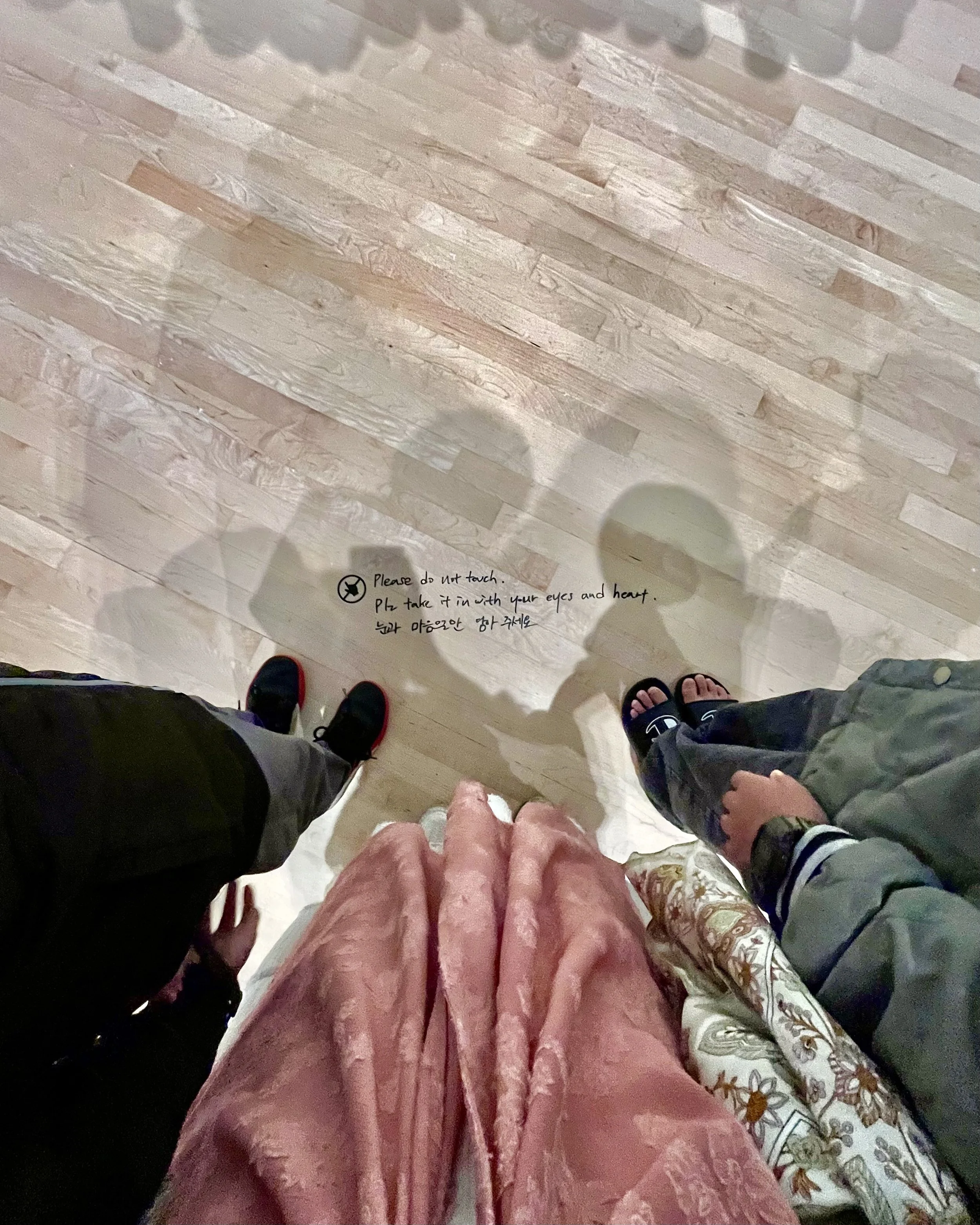
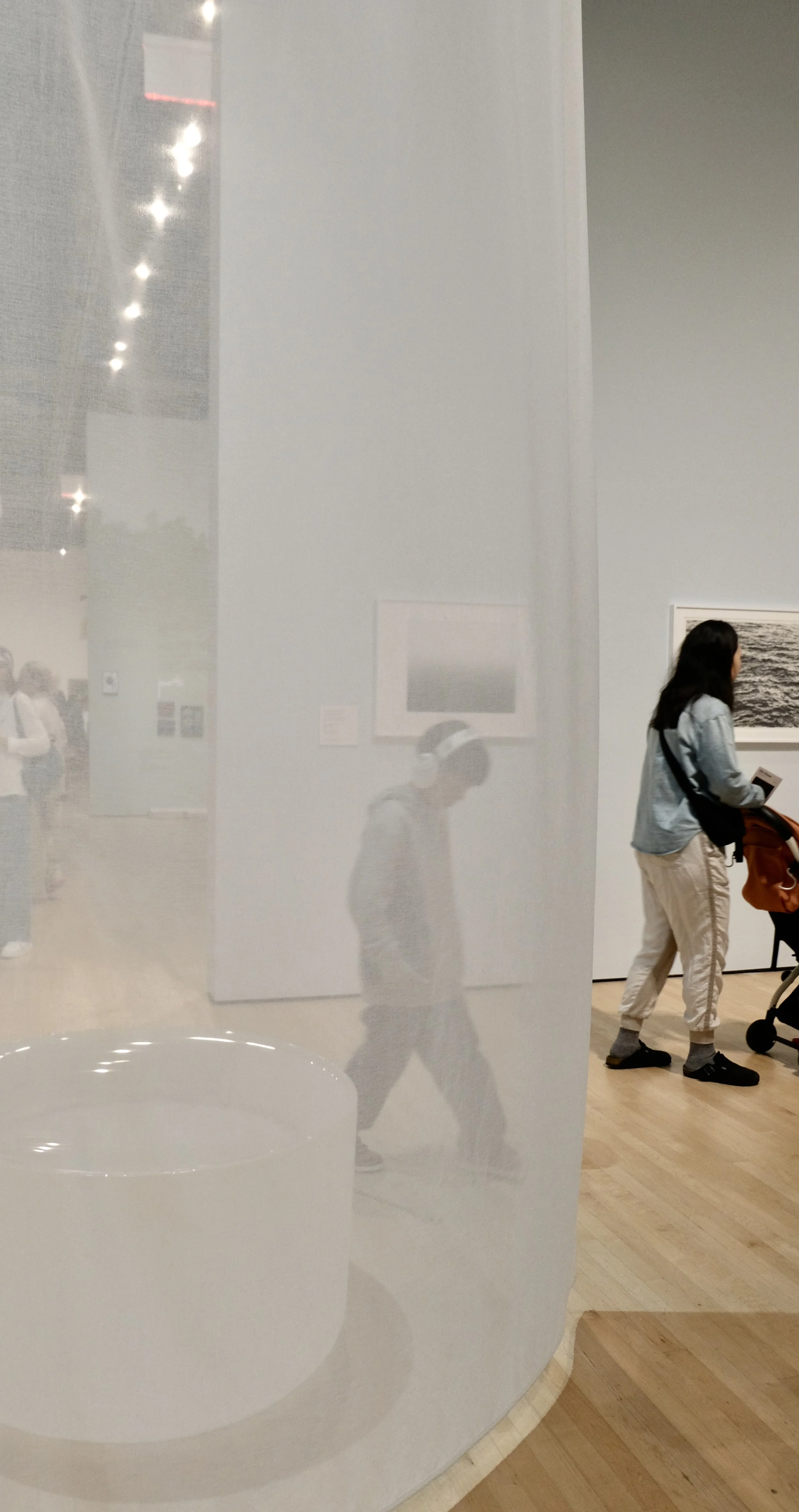
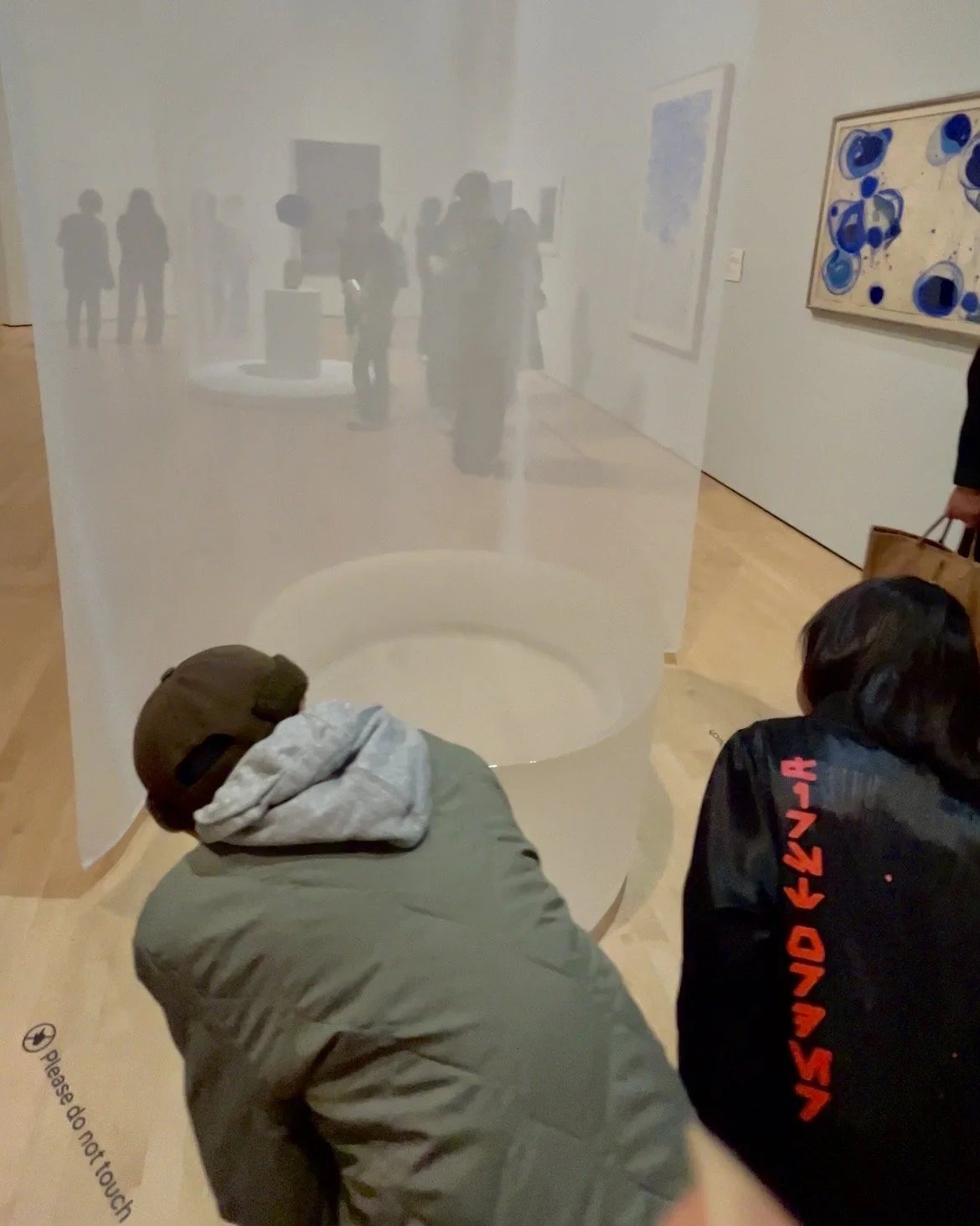
Throughout the exhibition, RM’s handwriting sets the terms. This art is precious to me. Please do not touch, reads one note. The Korean beneath it goes further: I trust you’ll enjoy it with your eyes only. It’s a museum’s house rule, delivered as a host’s request. From there, the hospitality compounds from room to room, which is curating at its best. Blue Water 파아란 물 opens in blue, the color designers reach for to signal calm and trust, which is why so many banks and wellness spas wear it. In Friendscape 친구가 있는 풍경, objects 1,500 years old stand an arm’s length away, with no glass between them and a room full of strangers. It’s a kind of hospitality I can’t remember experiencing in another museum.
Home 집 gives you a dining table to talk around, a couch comfortable enough for staying a while and a pair of accent chairs set for conversation. Photo Buddha 포토붓다 lets you step into the work and take the memory home. People 사람들 introduces faces, or leaves you to imagine them. Passion 열정 puts the artists’ own words on the walls. I don’t know.. but i like it 말로 설명은 안 되는데, 좋아 lets taste go unexplained. The Umber 다색 rooms belong to Yun Hyong-keun. On the surface his paintings look calm, all indigo, umber and black. RM’s audio guide tells you what lies beneath and I’ll leave that for you to hear. I left wanting to study Yun alongside Rothko—and for anyone who feels the same, the museum store carries a book titled [Rothko in Florence]. The hospitality follows you out. Behind the register in the exhibition store hangs a floor-to-ceiling photograph of Dae-o Bookstore 대오서점, a secondhand bookshop that has stood for more than sixty years in Seoul’s Seochon neighborhood, near Gyeongbokgung Palace. It’s RM’s favorite, a staff member told us.
Inside the Galleries
Tbd
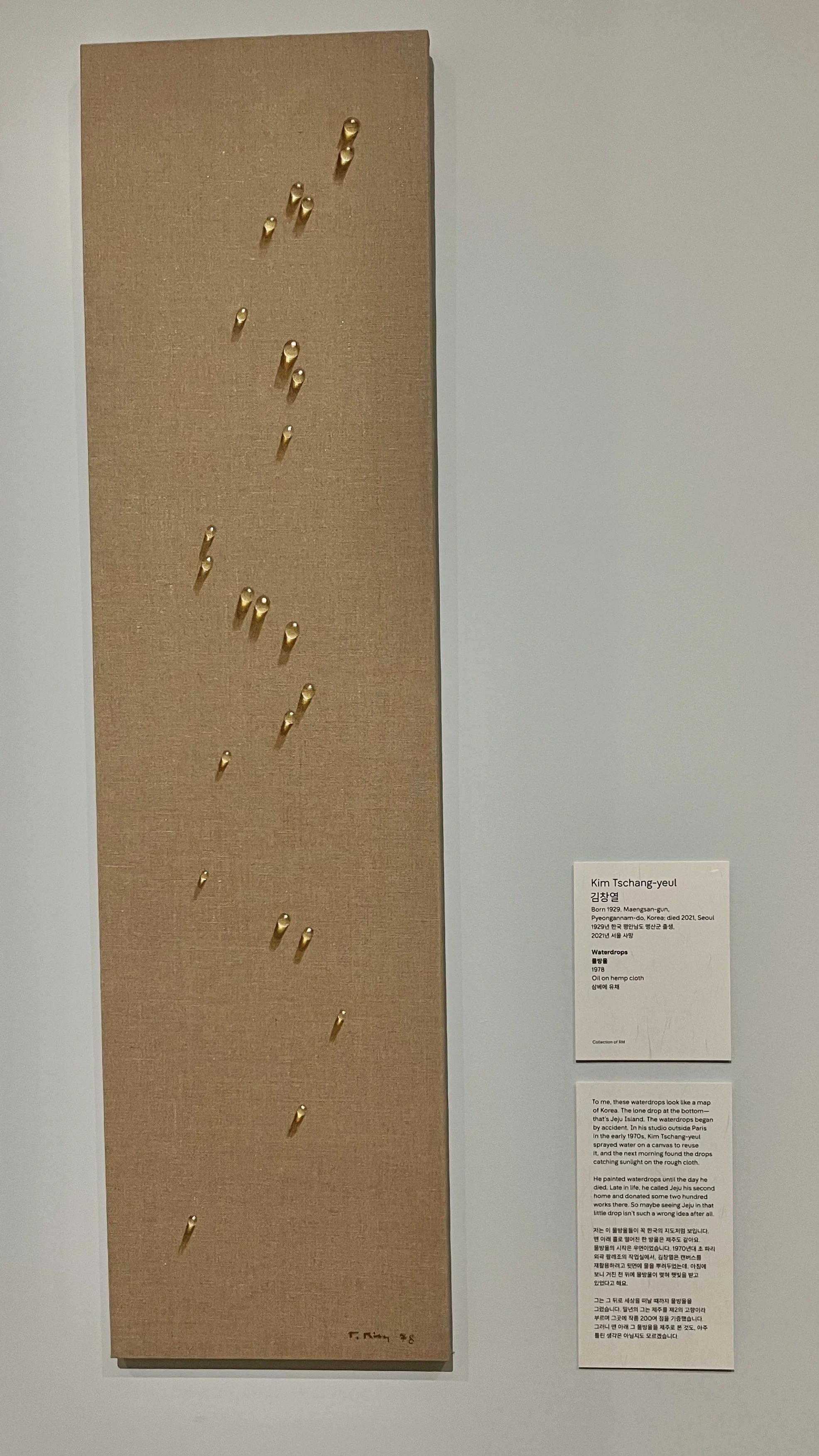
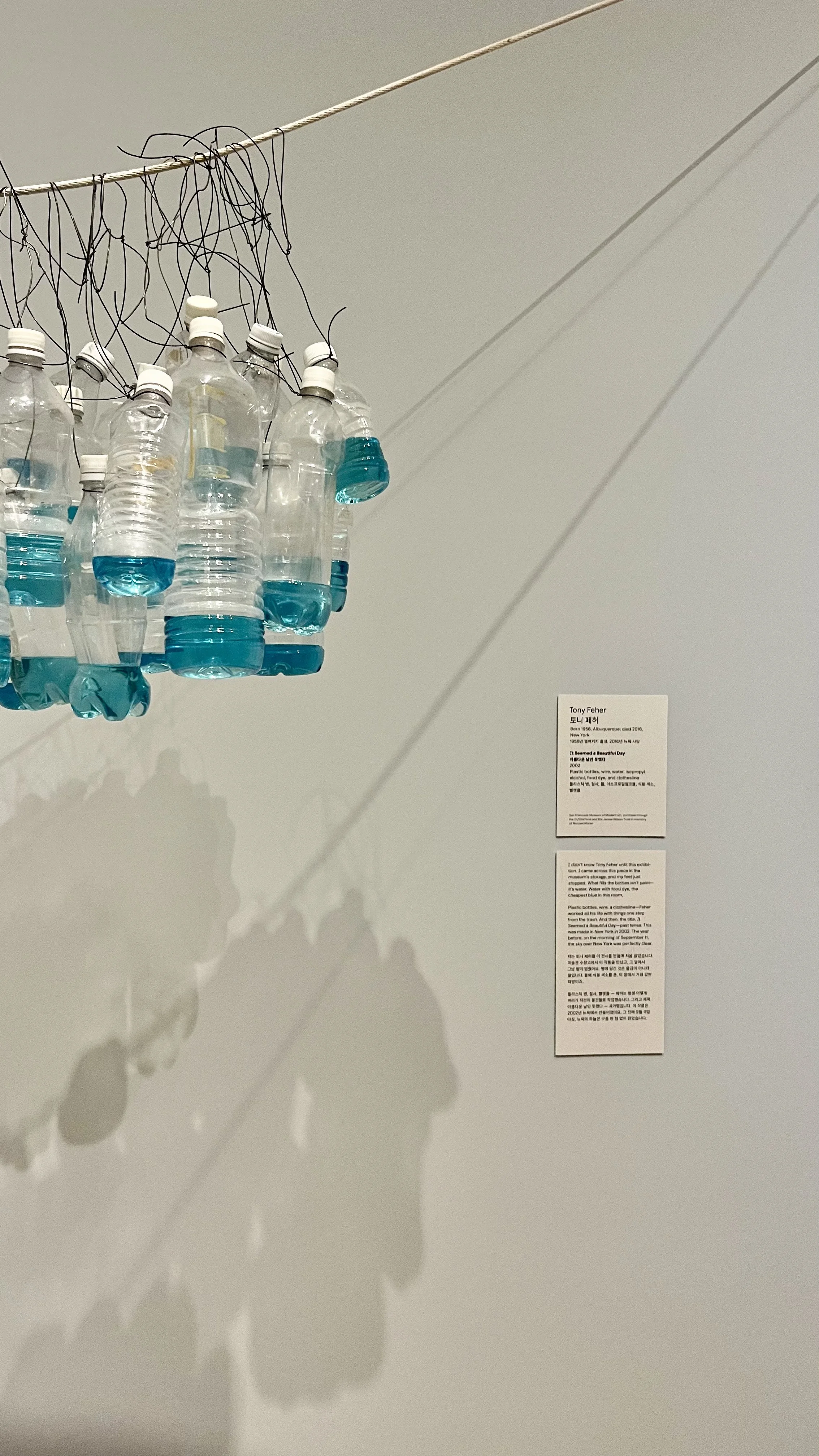
Blue Water 파아란 물
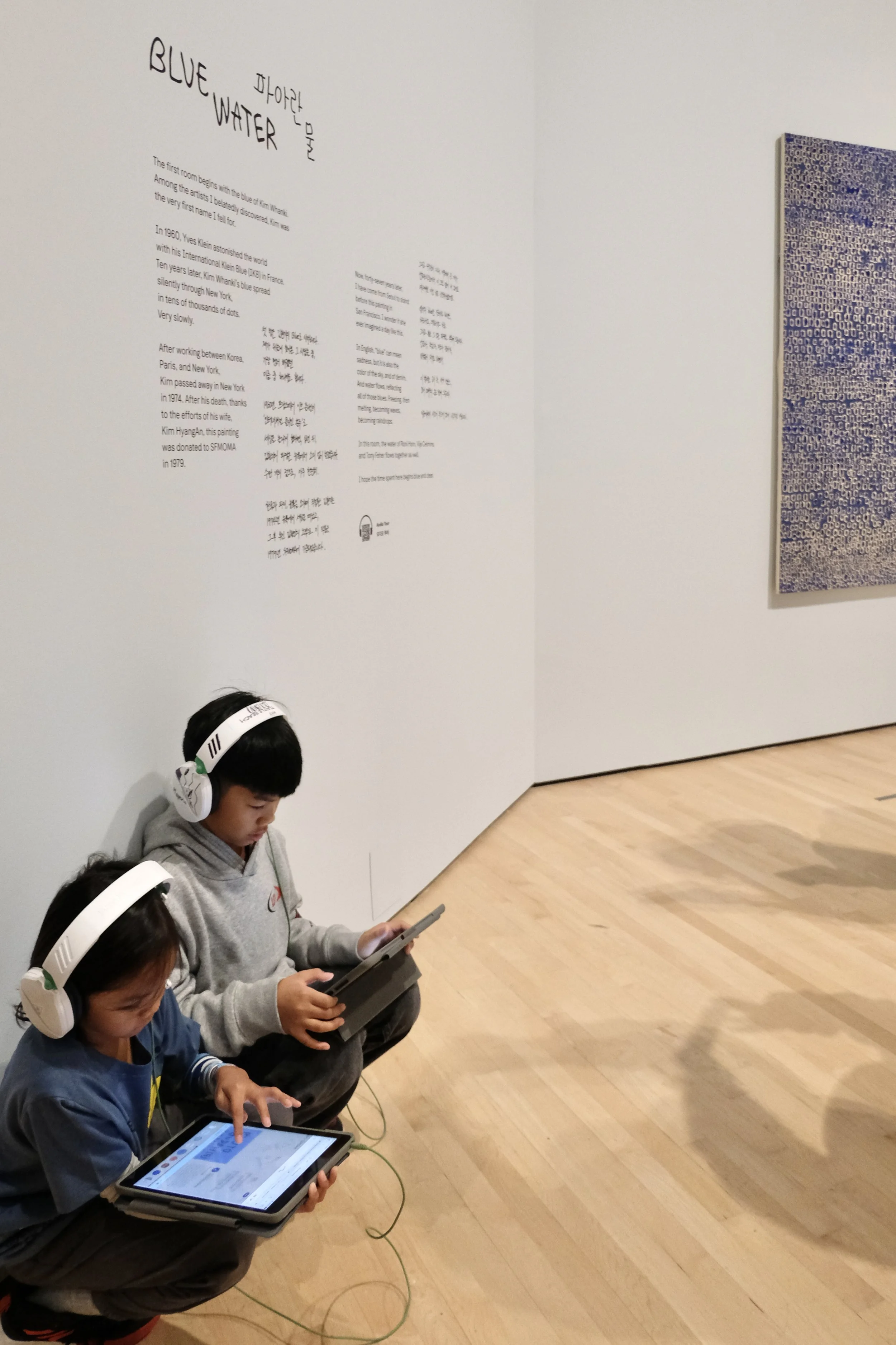
![Yves Klein, Éponge (SE251) (Sponge [SE 251]) (1961), with Kim Whanki's 26-I-70 #141 (1970) in the background. SFMOMA. Photography © The Noun.](https://images.squarespace-cdn.com/content/v1/67f9e8be36d6ca207405f432/1791670015351-NCOB32939NWKI6I2S9K6/IMG_0501.jpeg)
![Yves Klein, Éponge (SE251) (Sponge [SE 251]) (1961). SFMOMA. Photography © The Noun.](https://images.squarespace-cdn.com/content/v1/67f9e8be36d6ca207405f432/1791670016683-UVIOH1BPPK7UIYMQF4OE/IMG_0767.jpeg)
![Yves Klein, Éponge (SE251) (Sponge [SE 251]) (1961). SFMOMA, bequest of Phyllis C. Wattis. Photography © The Noun.](https://images.squarespace-cdn.com/content/v1/67f9e8be36d6ca207405f432/1791671328756-D69LL0YRG6OL1EBK2H1D/DSCF3273.JPG)
Friendscape 친구가 있는 풍경!


What Stayed With Us
We booked both member preview days on purpose. On the first, we skipped the audio guide and met the rooms the way we would any exhibition, staying only with what spoke to us. On the second, we listened to every track. On the first day, I was at an exhibition. On the second, I was welcomed into a home. These rooms speak most fully when their collector does. If you can only go once, listen.
One detail stayed with all three of us. RM changes the art in his bedroom with the seasons. Korea has four distinct ones, he says, and Koreans feel each of them closely. Some of those seasonal paintings hang in Friendscape 친구가 있는 풍경. It’s also not lost on us that BTS is seven, the show fills Floor 7, and seven wooden geese float in Friendscape 친구가 있는 풍경.
My pick. Rhee Seundja, Le vent en témoigne (The Wind Testifies), 1965. Rhee left her children behind in Korea to paint in Paris, and her wall quote reads: “Each brushstroke was like feeding my children I had left behind in Korea one more bite of rice.” What she wrote carries a longing that reads as sadness. What she painted, dot after dot in the colors of a setting sun, carries the same longing, yet it looks hopeful. It hangs in Passion 열정, a room that was deeply personal to me as a single, homeschooling, creative mom.
[IMAGE: you with Le vent en témoigne]
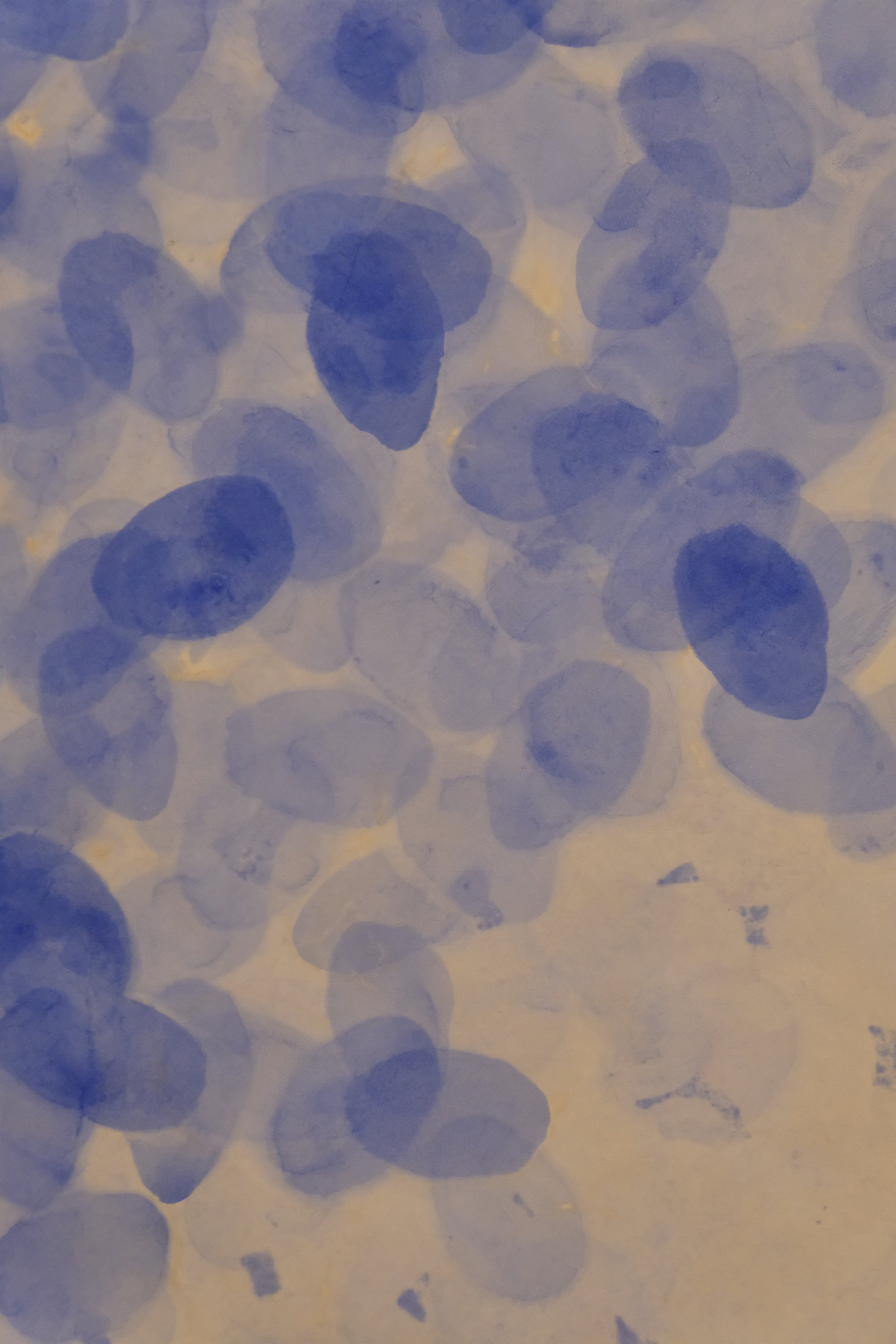
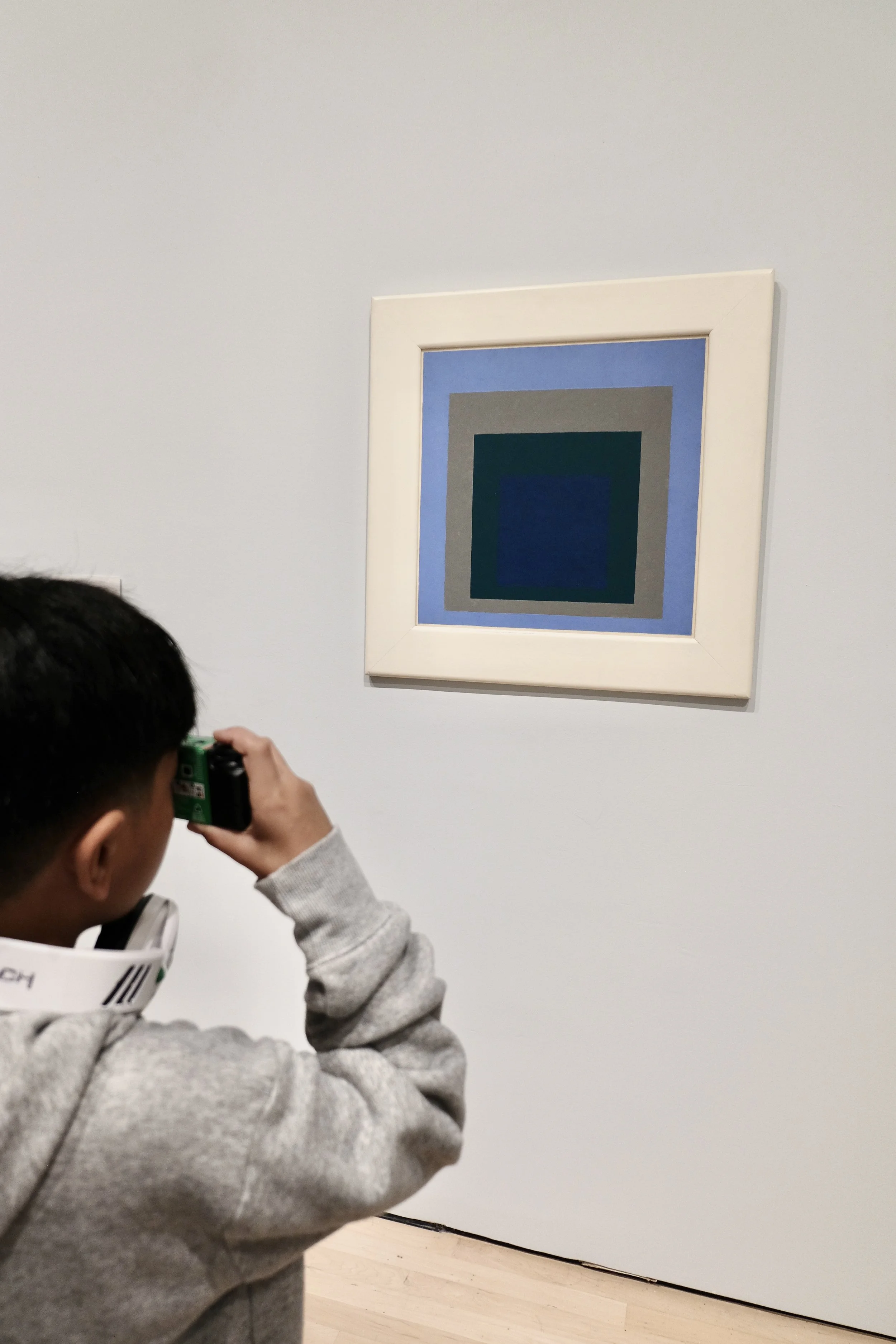
The boys’ picks. My youngest memorized one title afterward, for homework: 26-I-70 #141. Kim Whanki named his late paintings for the day he finished them, so this one is January 26, 1970, painted in New York four years before his death. Up close, the field of blue stops being pattern and becomes handwork, one dot at a time. My eldest photographed Josef Albers’s Homage to the Square: Secluded (1951), squares nested inside squares, with his disposable camera. Individually, we each lingered with different pieces. Together, the room we stayed in longest was Friendscape 친구가 있는 풍경, and the artist we stayed with longest was Chang Ucchin, whose paintings, the label notes, are mostly no bigger than two open hands. He’s also among the works co-curator América Castillo singles out in SFMOMA’s “Art That Stays with You.” Writing this, I realized none of us ever talked about why. When I come back without the boys, People 사람들 and Passion 열정 are the rooms I’ll give the most time.
[COLLAGE C3 + B5-04]
He shops his parents’ house. A photograph of everyday Seoul in People 사람들 came straight from RM’s parents’ home. He jokes that he told them he needed it for the exhibition, so he took it. Another painting of theirs he’d mentioned liking went home with him too. It’s a family dynamic plenty of us will recognize. Many of us shop our parents’ pantries. For this exhibition, RM shopped their walls.
[B8-04]
RM says he wanted to be a writer growing up. He chose rap because he loves languages, each with its own texture and frequency, and because some things can’t be said in words at all. Where words fall short, he lets what he kept speak for him, in two languages.
At the entrance to the final room, he leaves one last note: Please stay here a while. Thank you sincerely for being here with me. A host’s goodbye.
For Your Visit
Book a weekday or a Sunday. SFMOMA welcomed 7,500 visitors in the opening days, has taken more than 50,000 reservations and saw advance sales six times higher than for any previous exhibition. Floor 7 needs a timed special-exhibition ticket through February 7, 2027: sfmoma.org/exhibition/rm-x-sfmoma.
[B12-03]
Arrive at Floor 7 on time, not early. Your ticket time is for Floor 7, not the museum entrance. While we waited in the 10 a.m. line, staff were turning away visitors with 10:30 tickets until their time came. If you’re early, spend it in the other galleries or a café, then head up. During the previews, the line took about ten minutes, and it’s where you can photograph the wall RM signed. Backpacks must be carried low or worn on the front.
Park in the SFMOMA garage. Pass the museum on your right, then turn right into the alley between the St. Regis and SFMOMA. SpotHero only let us prebook three hours. A full day at the garage cost about $26, nearly the same. Allow 15 to 20 minutes from your car to Floor 7, including elevator waits in both the garage and the museum.
[B11-06]
Consider a membership. That’s how we saw the show early. Members get free admission and reserved access to RM x SFMOMA during the last hour of each day. A Dual membership covers up to four adults per visit, and children 18 and under are always free. During the previews, the ticket desk was handing members posters. We walked right past on day one.
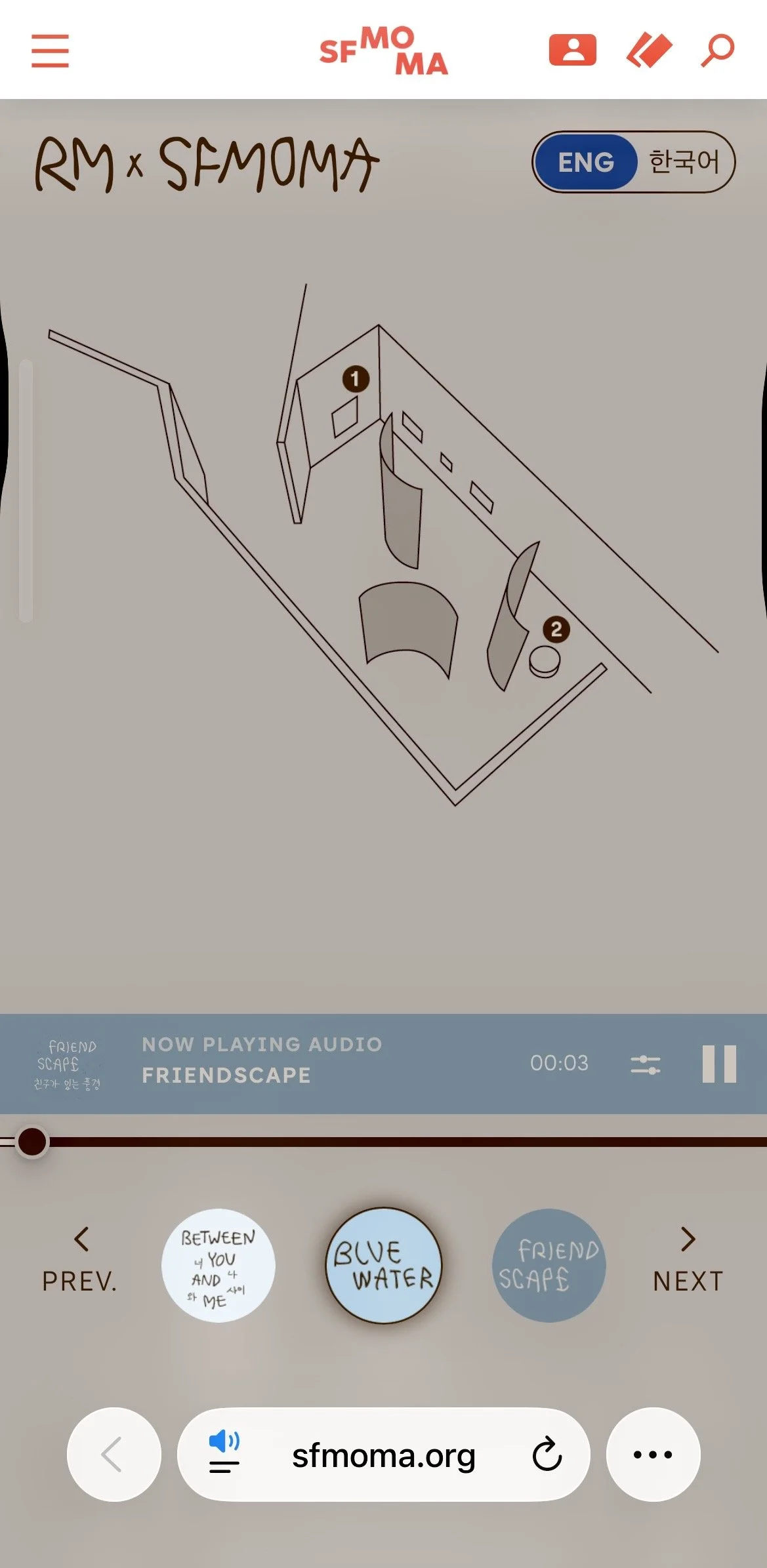
Use the audio guide. RM’s guide is free in English and Korean: [audio guide link]. Each track runs a few minutes and comes with a floor map showing exactly which work he’s discussing. SFMOMA’s free Wi-Fi only asks for your email. Bring headphones, and don’t hesitate to ask staff for help. They were wonderful.
[B5-05]
Plan for nearly 180 works. That’s a lot to absorb, so know how you take in art. On day one, we spent an hour and a half on Floor 7. On day two, with the audio guide and notes in hand, we spent two hours, returning to the pieces we’d marked the day before. We still missed more than I wanted to learn about, so we’ll be back over the holidays. If you can visit more than once, do. That goes for every floor of SFMOMA. As members, we’ve yet to see an exhibition here that we didn’t leave better for.
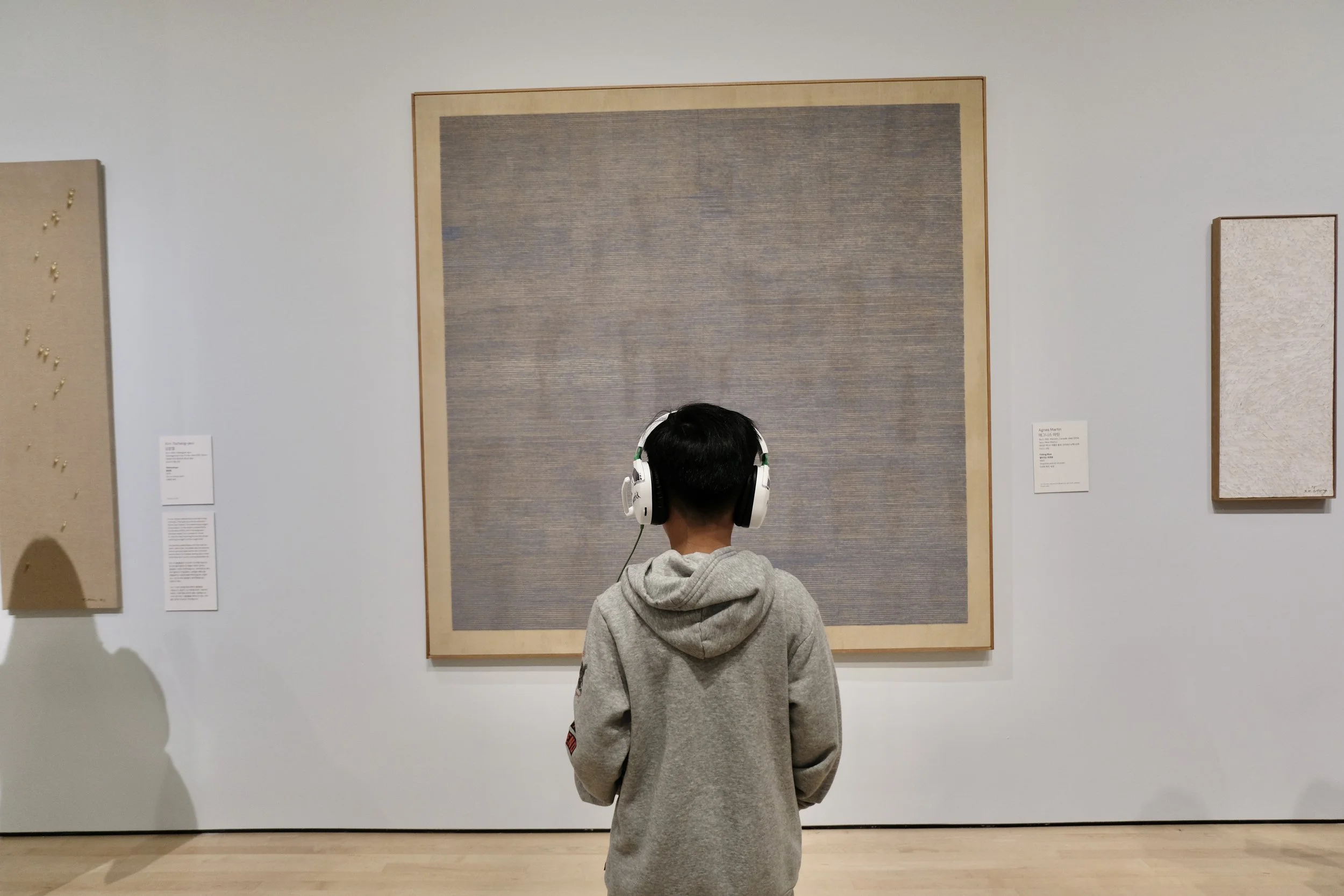
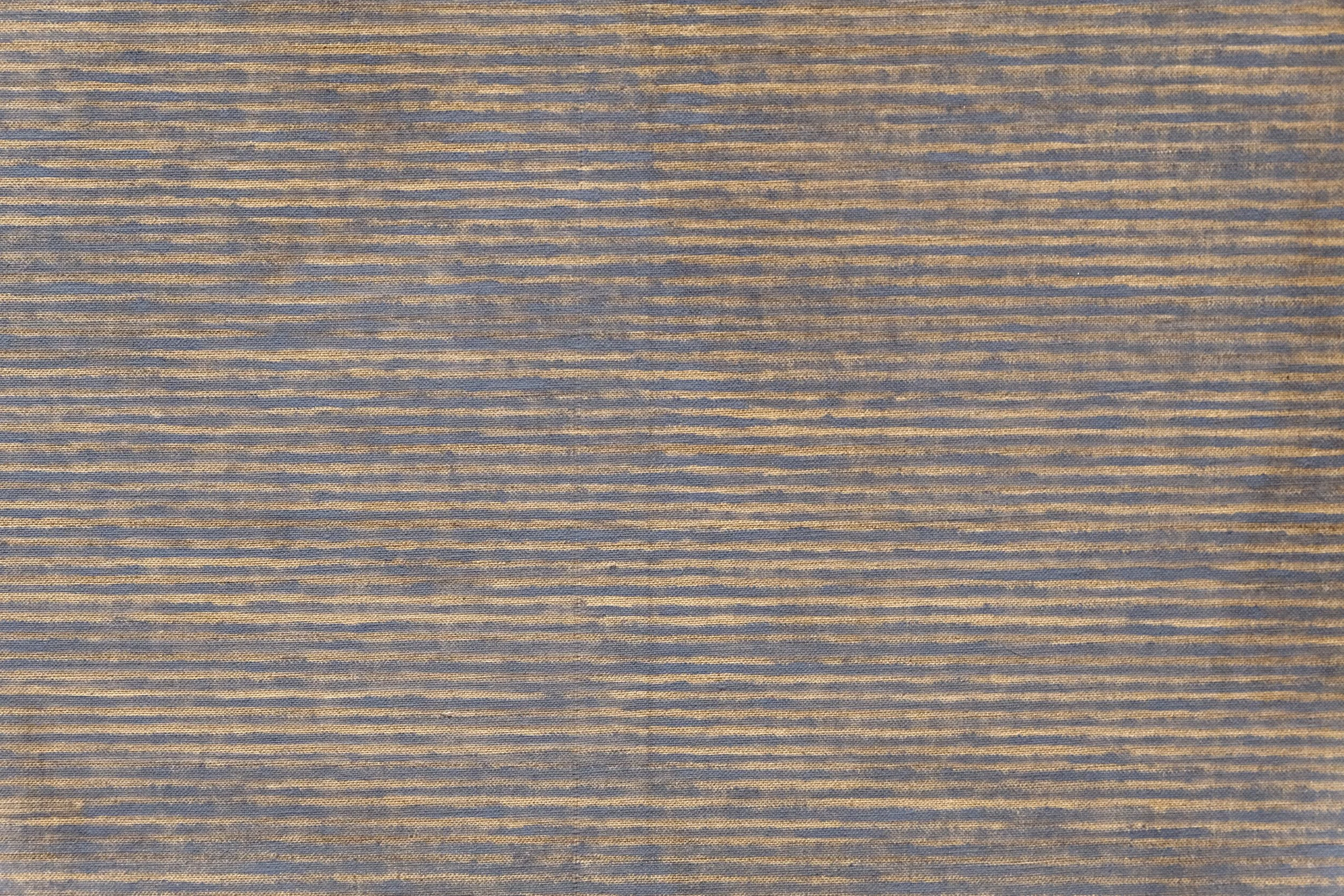
Look first, shoot second. Take your portrait, but look at the work before you turn your back to it. Shoot through the linen in Blue Water 파아란 물. Find the spot where Klein’s sponge and Kim Whanki’s dots fall into one frame. Get low for RM’s handwritten floor notes. In Photo Buddha 포토붓다, lean in and you’ll appear on the Buddha’s screen.
Know your food stops. We heard afterward that Cafe 5, on Floor 5, has an RM-inspired menu. Steps Coffee on Floor 2 is one of our favorite places in the building because it shows art from the community. Before this show, it hosted UCSF’s Art for Recovery, by artists living with cancer and HIV/AIDS. Now it shows an installation by Mission High School students and educators. From the steps, you look out over Jacob Hashimoto’s Giant Arc, nearly 75,000 kites suspended over the Roberts Family Gallery and free to the public. It’s a good place to sit and decompress after that much art. Jane on Third, on the ground floor, serves fuller meals.
Budget for the exhibition store. Exclusives run from the $20 zine through $40 posters, $45 hats and $55 tees to a $125 sterling silver “Between You” brooch, two per style. On busy days, staff walk the line with a list of sold-out items crossed off. Once you leave the Floor 7 store, you can’t come back in, but the main store on the ground floor carries the same RM items. Upstairs, find the shelf of RM’s recommended reads and the MU:DS table, imported from the National Museum Foundation of Korea. RM serves as the National Museum of Korea’s global ambassador. My boys passed on the RM merch and spent their money in the main store’s kids’ section, Designed for Play. On the way out, my eldest immediately asked to borrow my I don’t know.. but i like it hat. Luckily, the collection is also available online, with pre-orders open and international shipping. Downstairs, a staff member walked the long register line just to thank us for our patience. The hospitality ran through the whole building.
[COLLAGE C9]
We spent the rest of the day exploring SFMOMA’s other exhibitions and installations, several of which we absolutely adored, along with the neighborhood around it. We’ll share both in a separate article, and more from San Francisco in No. 002 Swells & Soul Food, out November 1. We print just 100 collectible keepsake copies of each issue. Every issue is always free to read online, because we believe knowing the world’s art and culture is a necessity, not a luxury.
