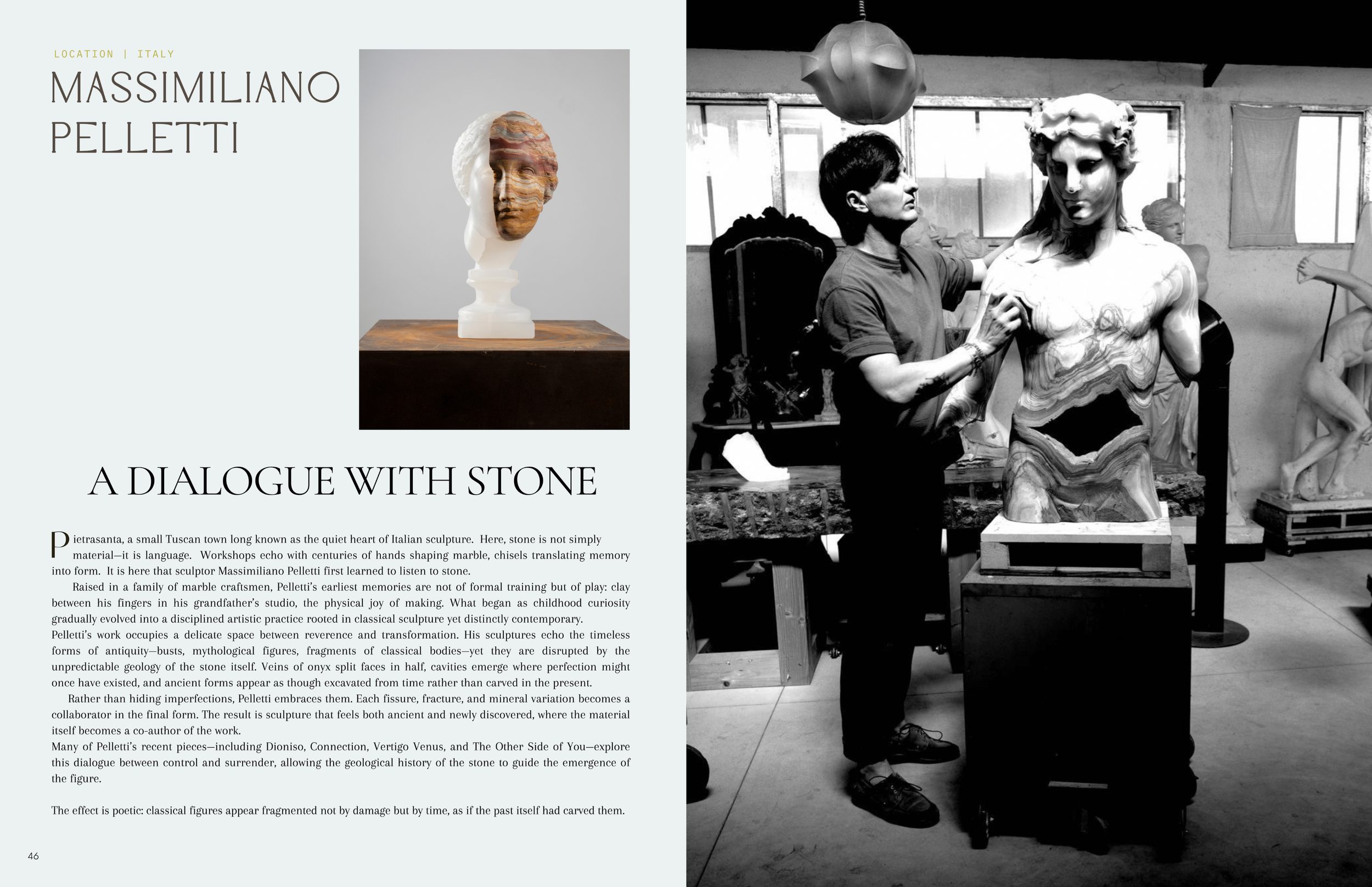
A Dialogue with Stone: A Conversation with Massimiliano Pelletti
Pietrasanta, a small Tuscan town long known as the quiet heart of Italian sculpture. Here, stone is not simply material—it is language. Workshops echo with centuries of hands shaping marble, chisels translating memory into form. It is here that sculptor Massimiliano Pelletti first learned to listen to stone.
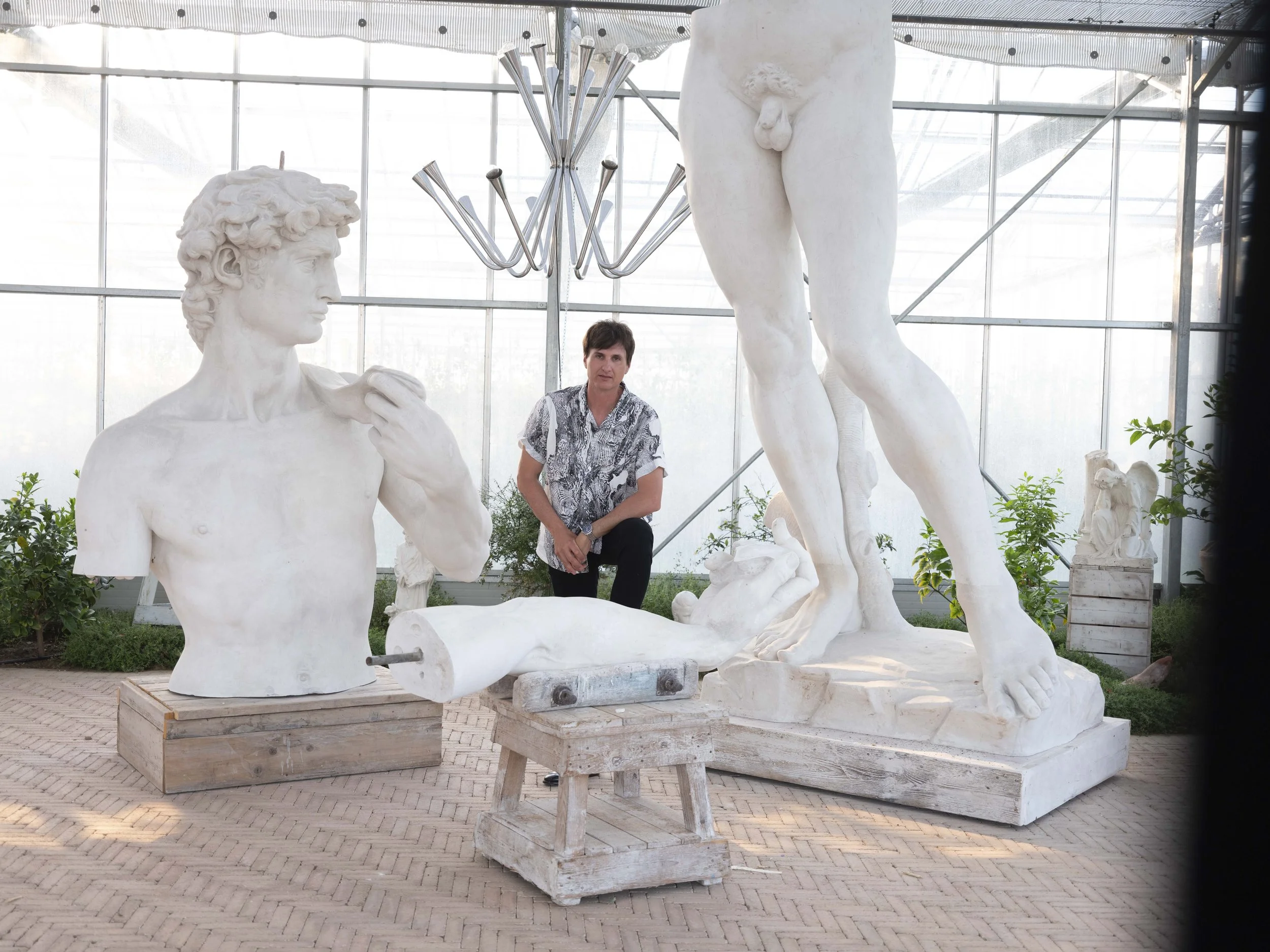
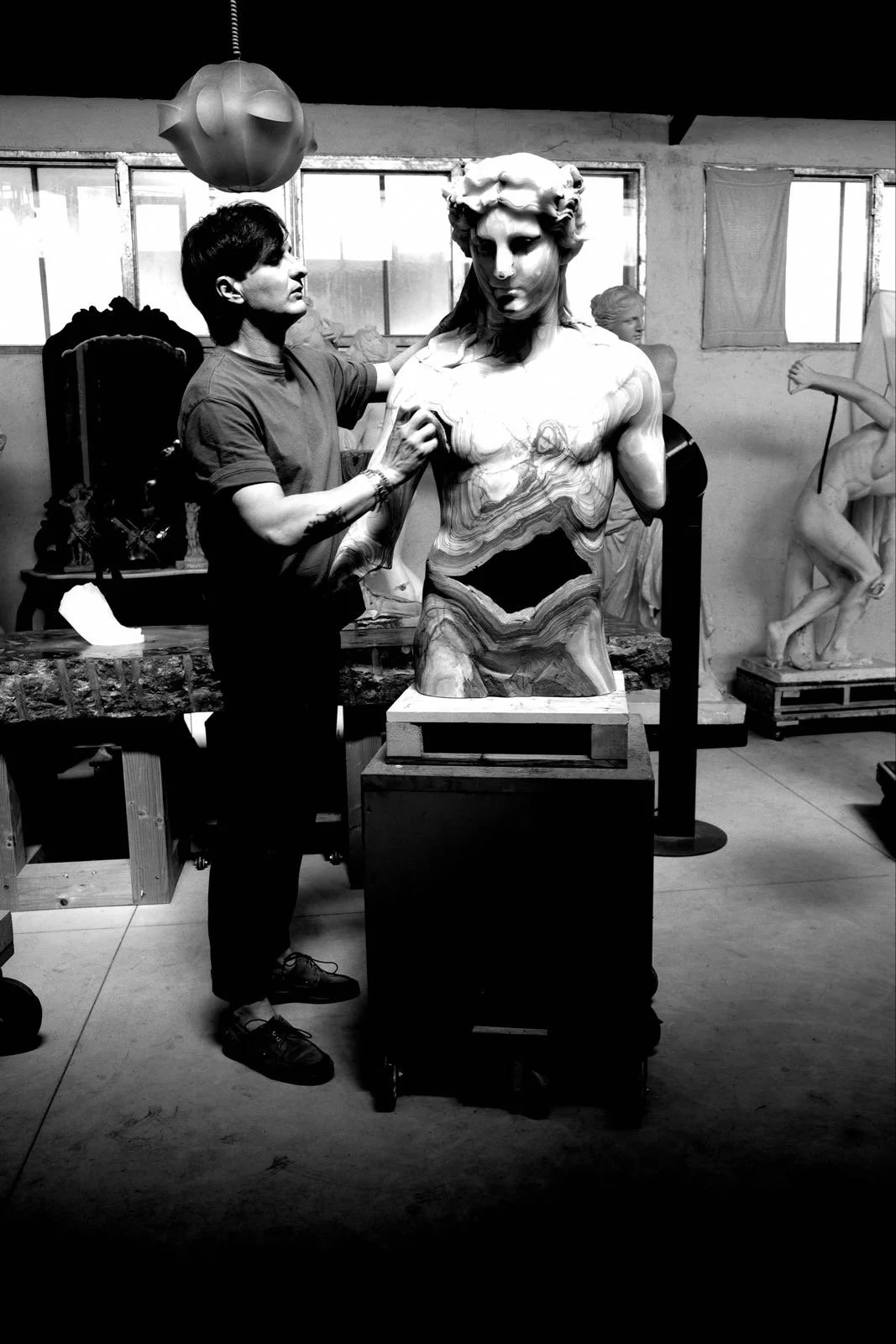
Raised in a family of marble craftsmen, Pelletti’s earliest memories are not of formal training but of play: clay between his fingers in his grandfather’s studio, the physical joy of making. What began as childhood curiosity gradually evolved into a disciplined artistic practice rooted in classical sculpture yet distinctly contemporary.
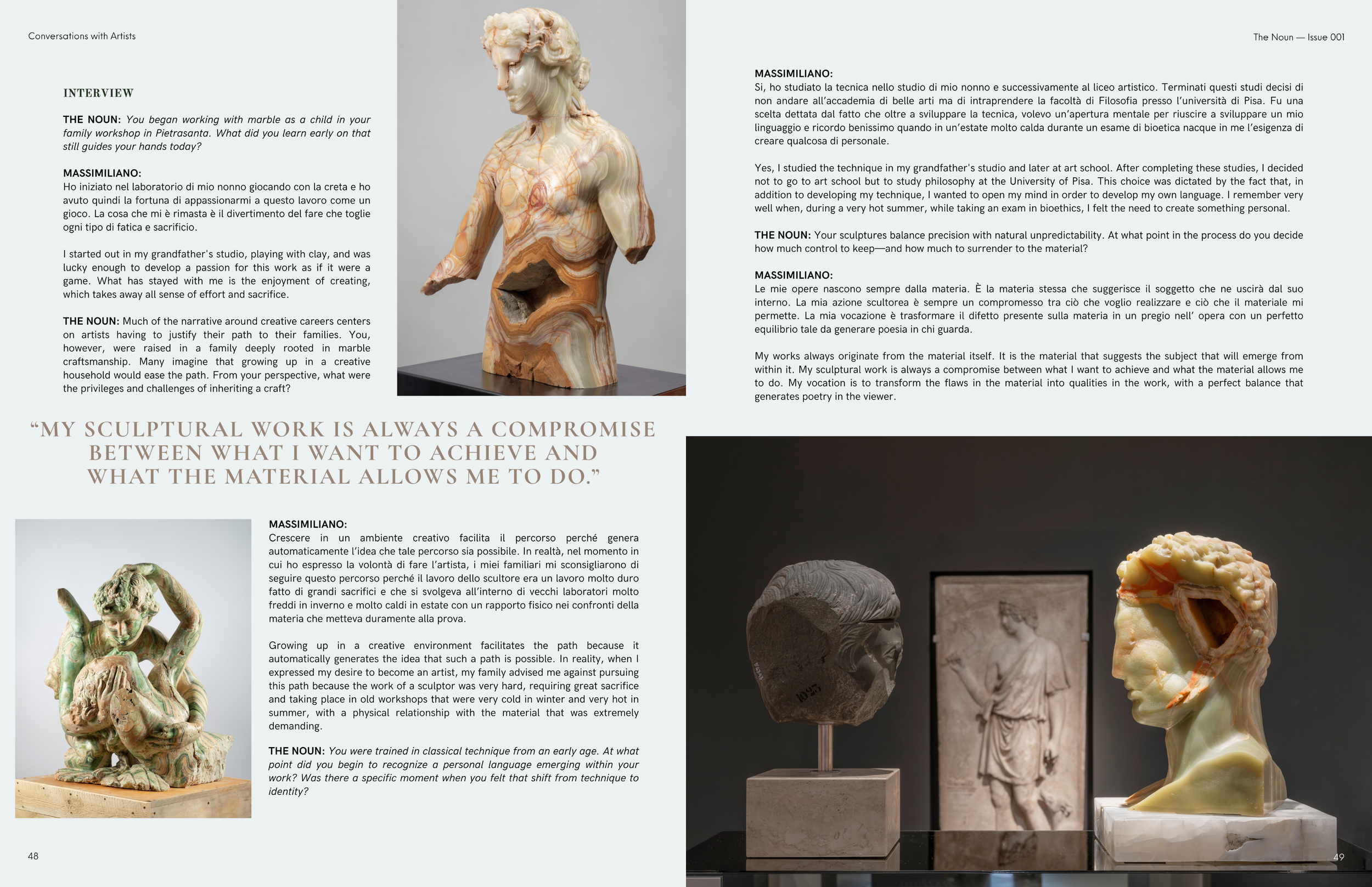
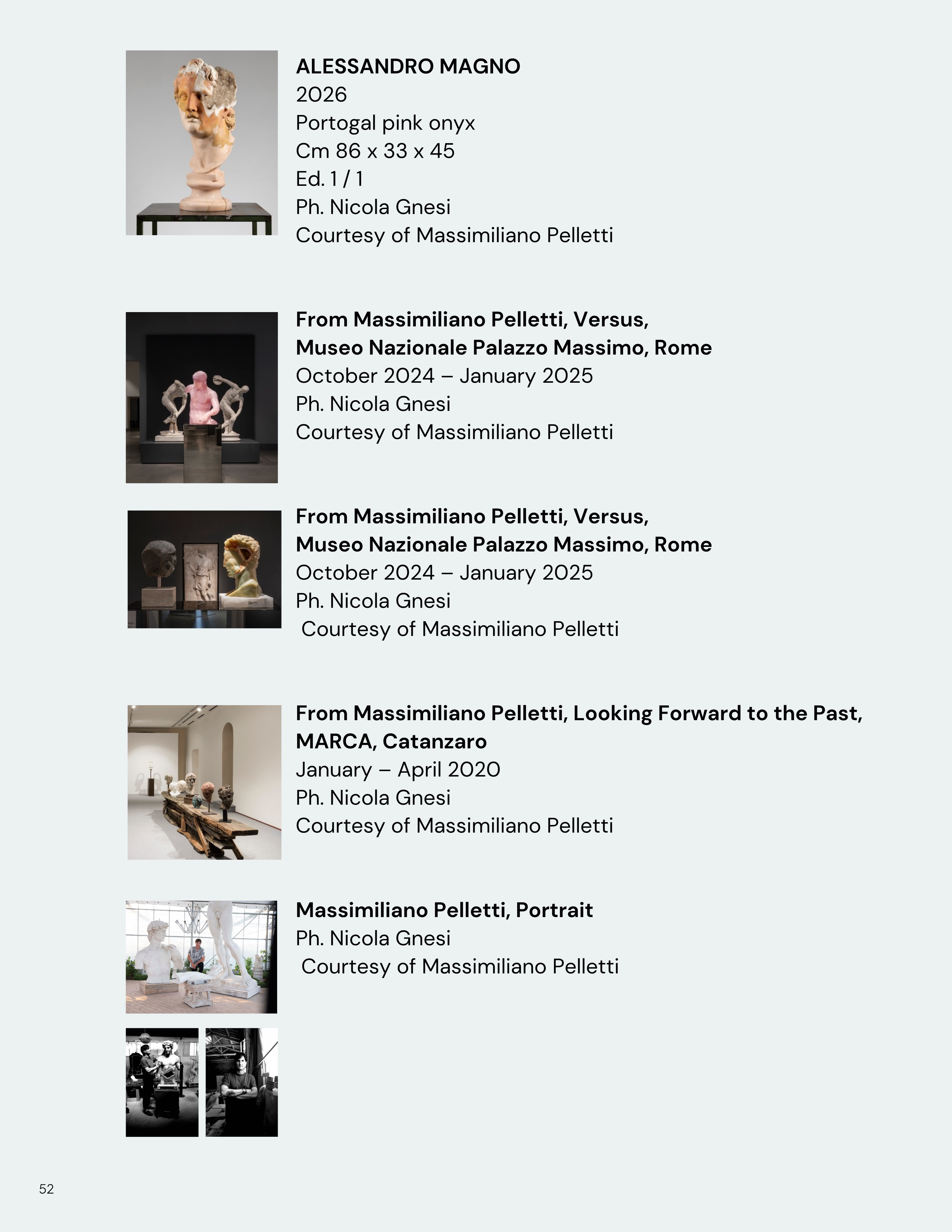
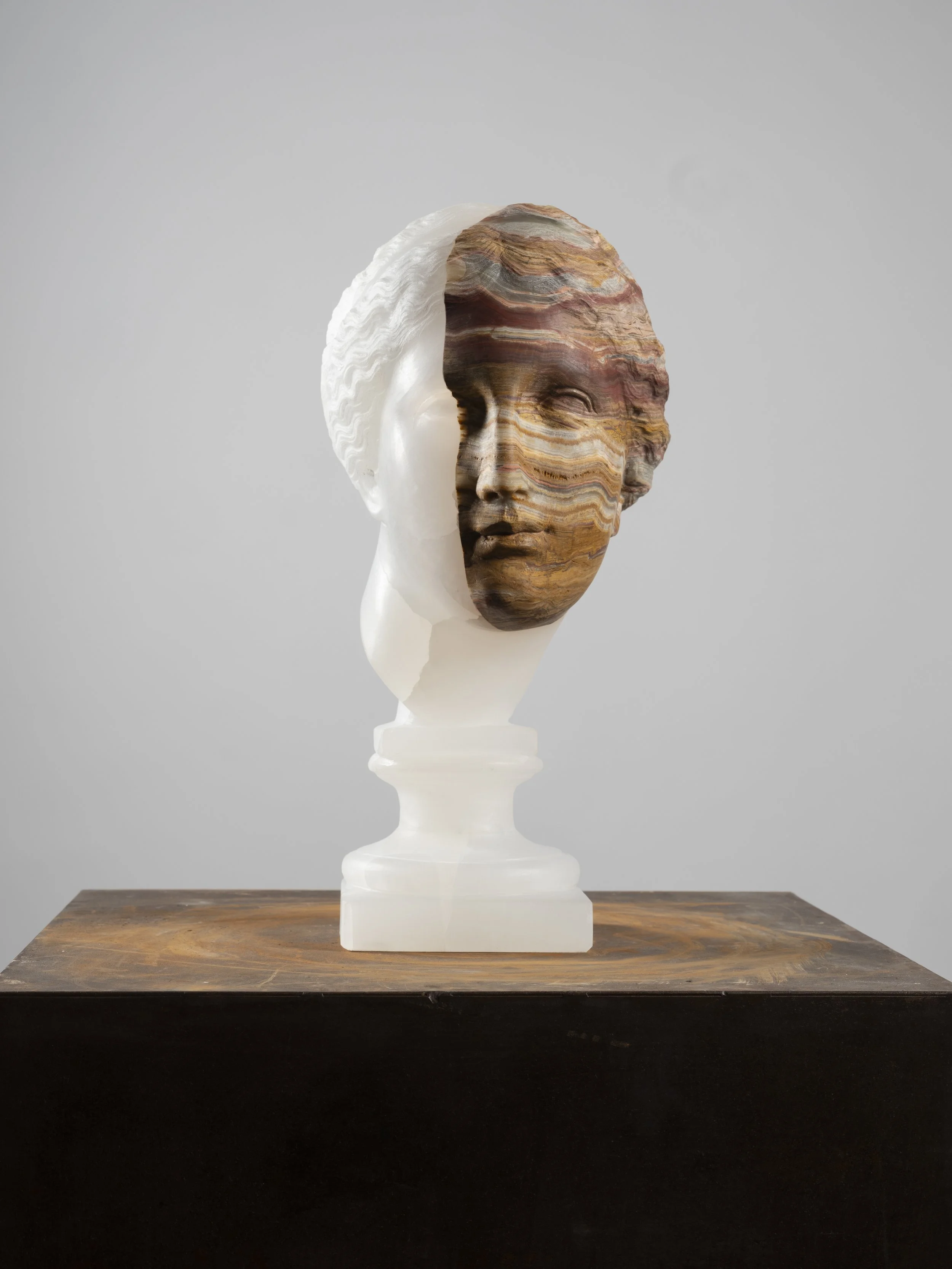
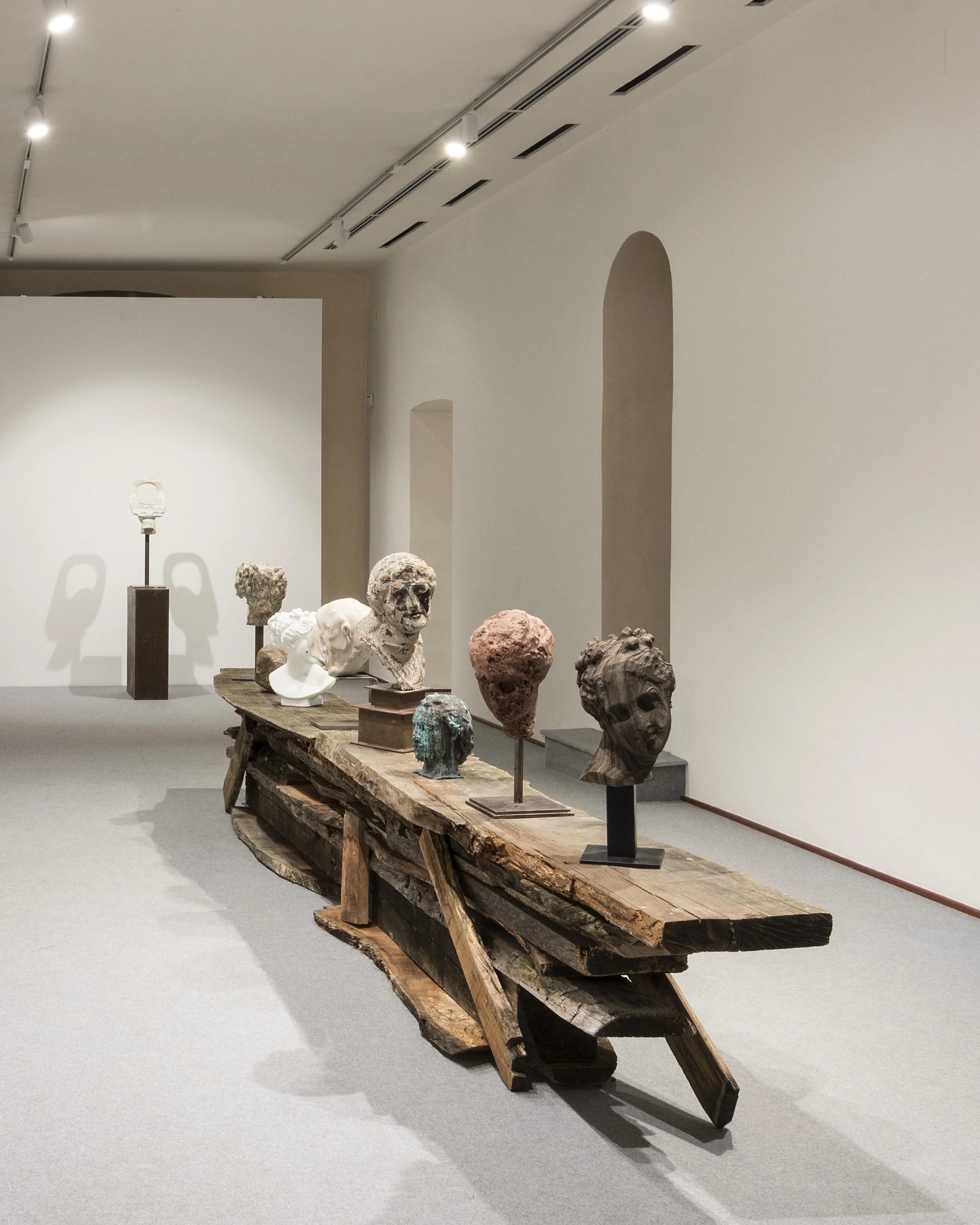
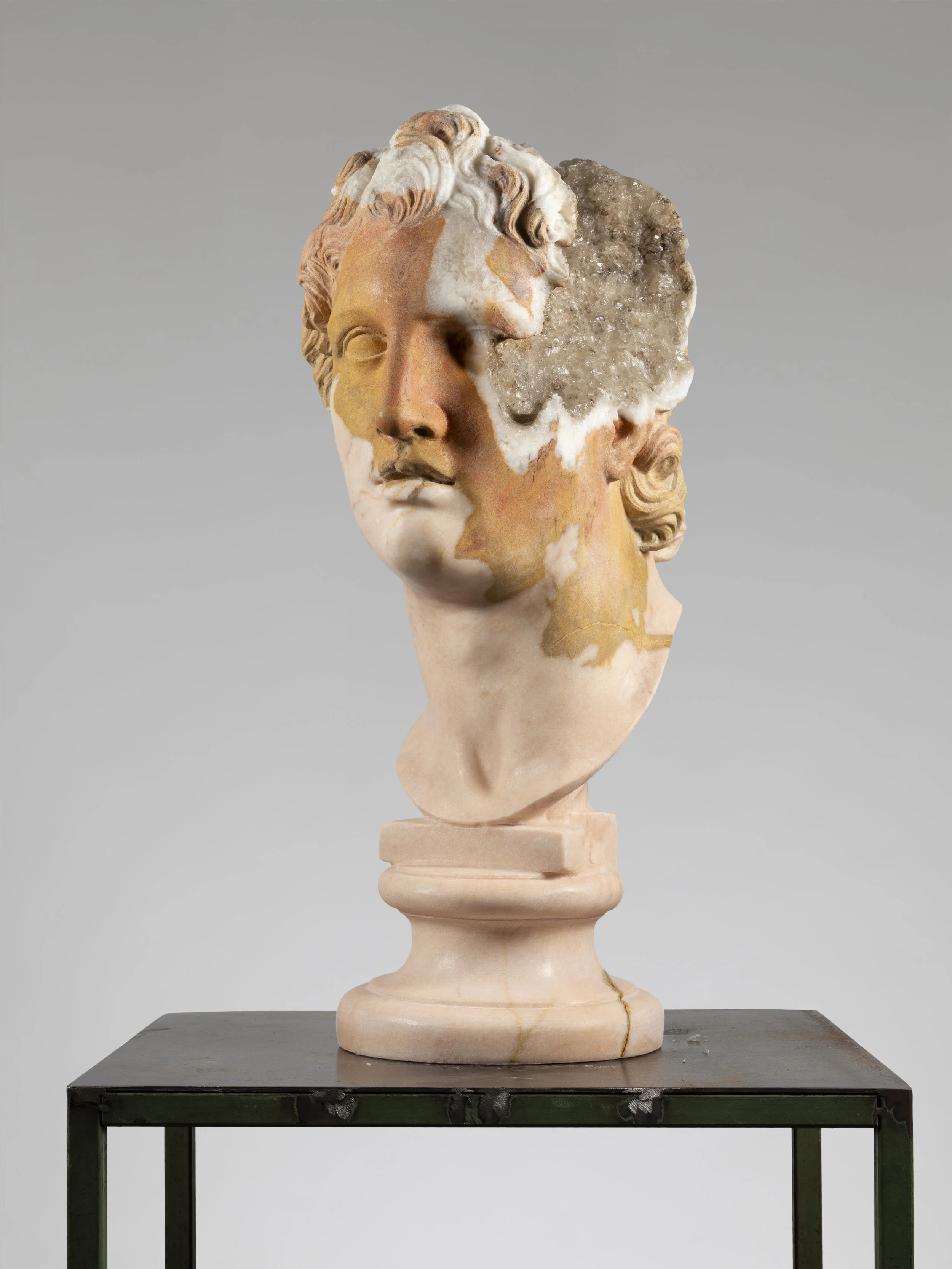
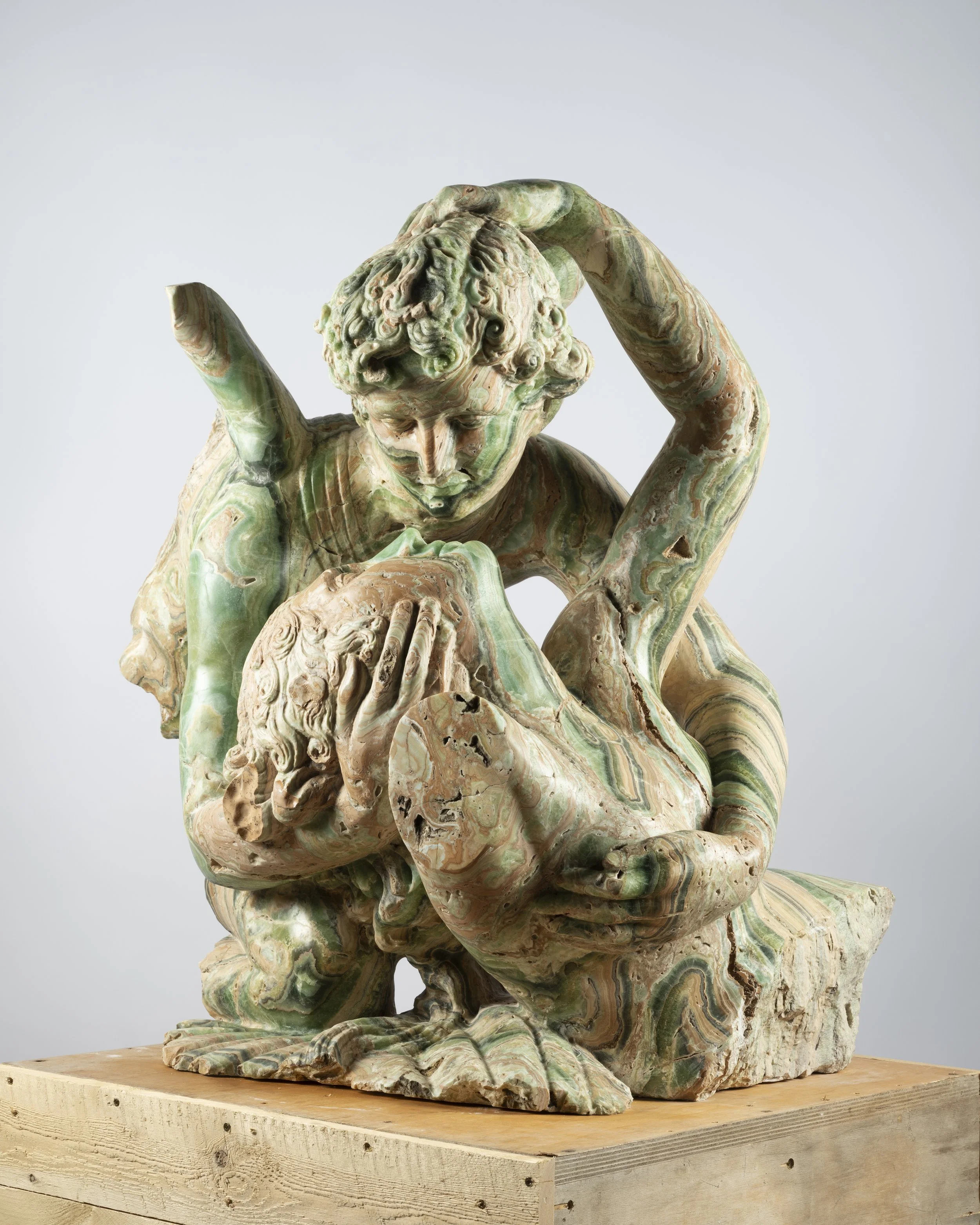
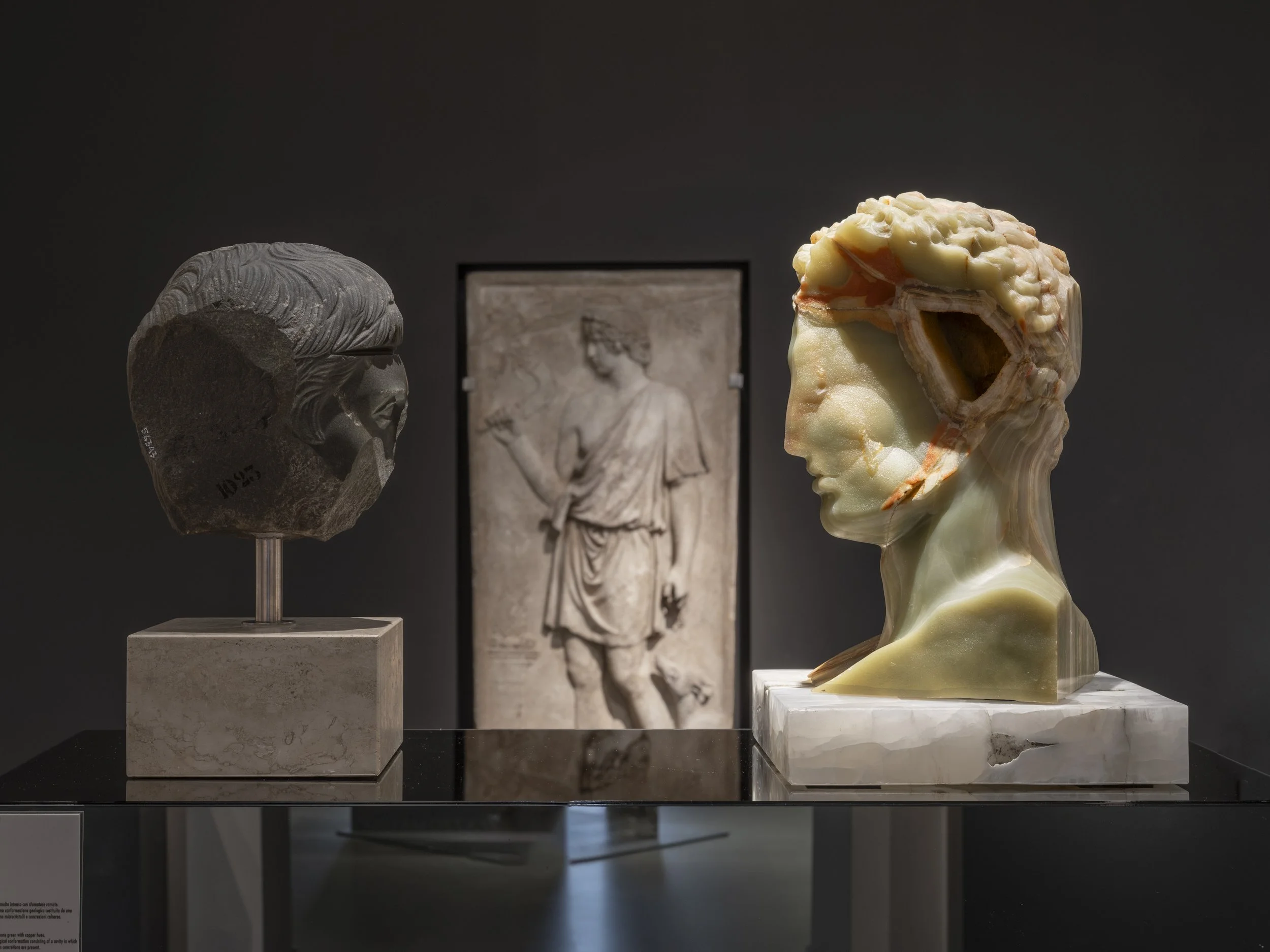
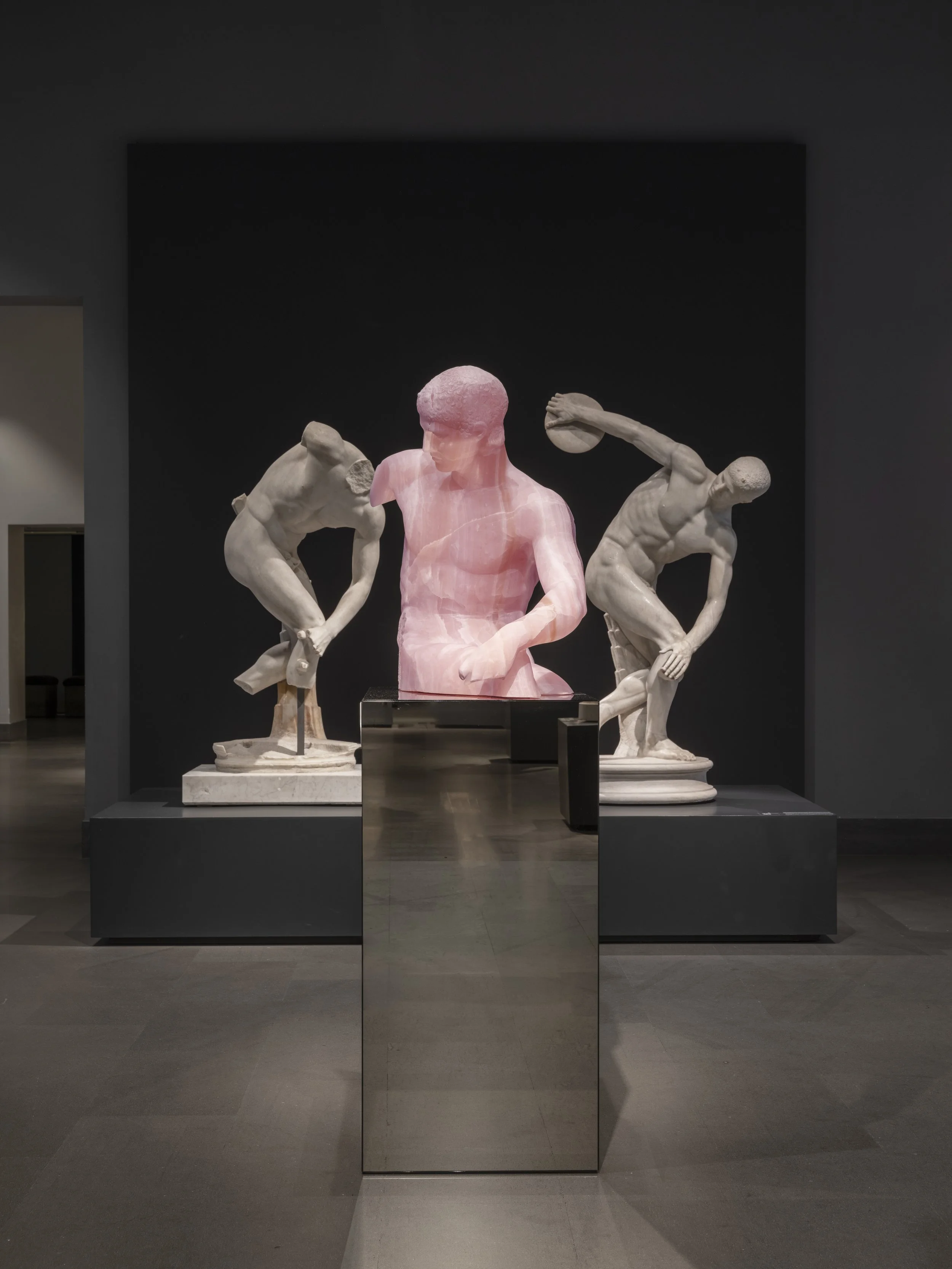
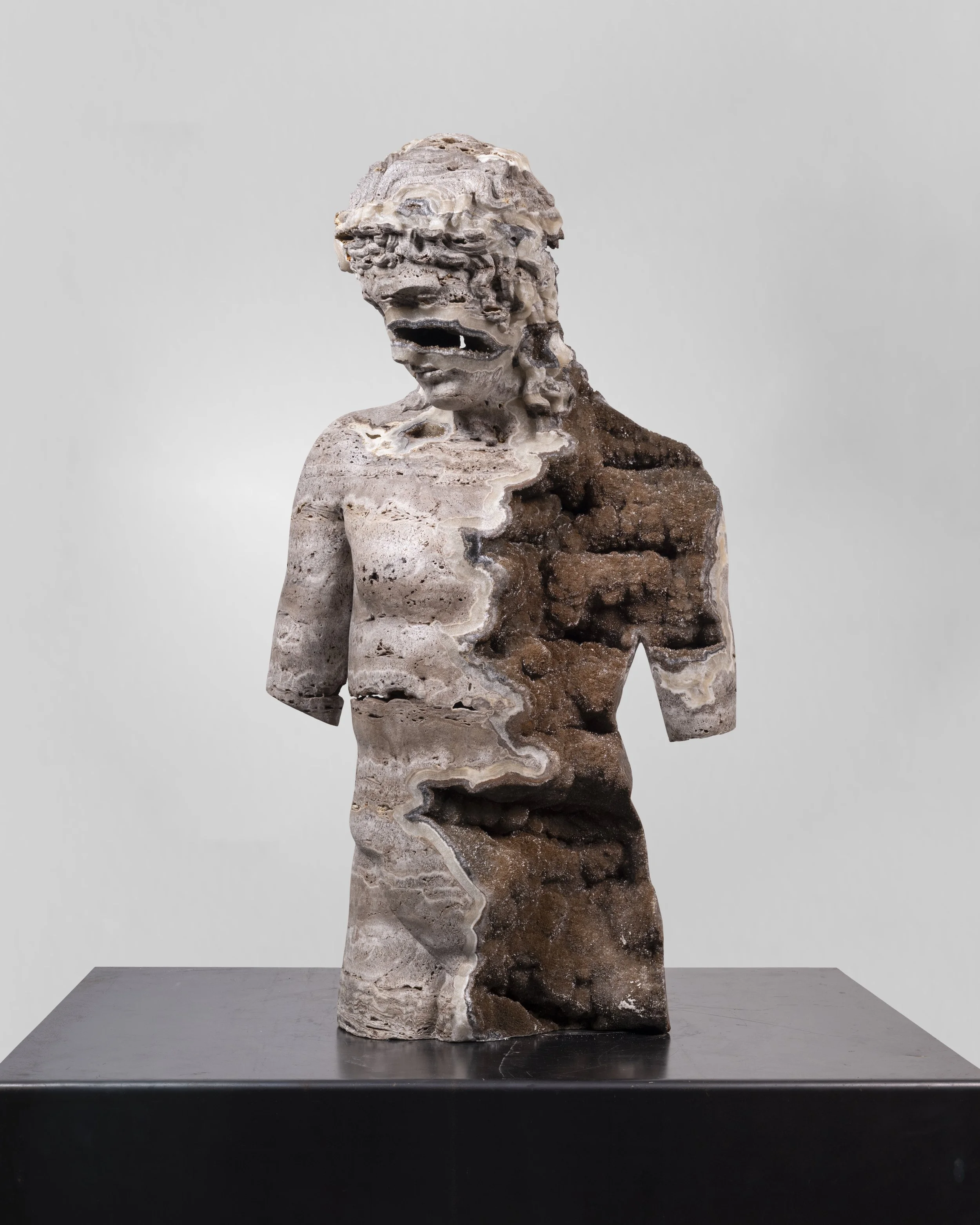
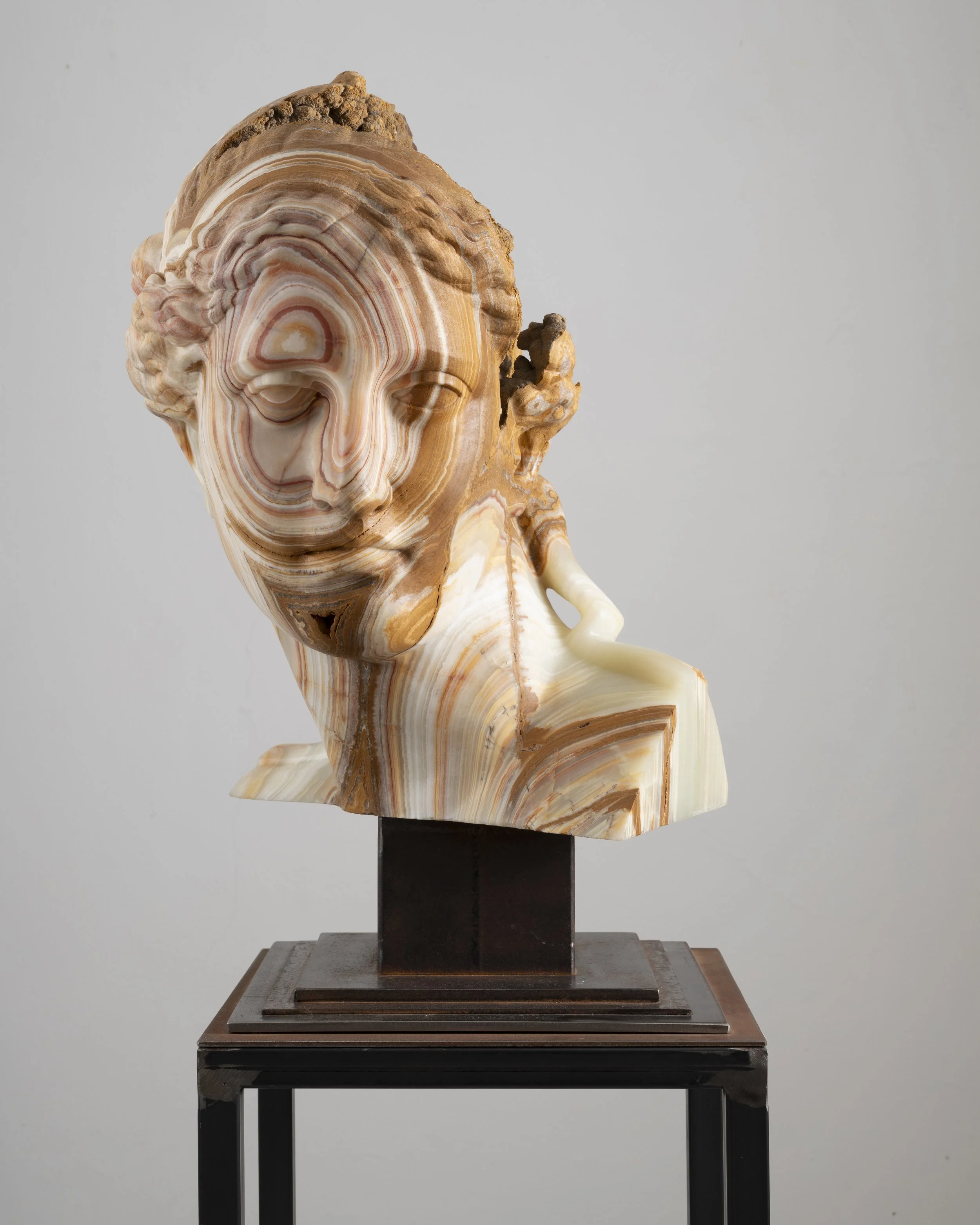
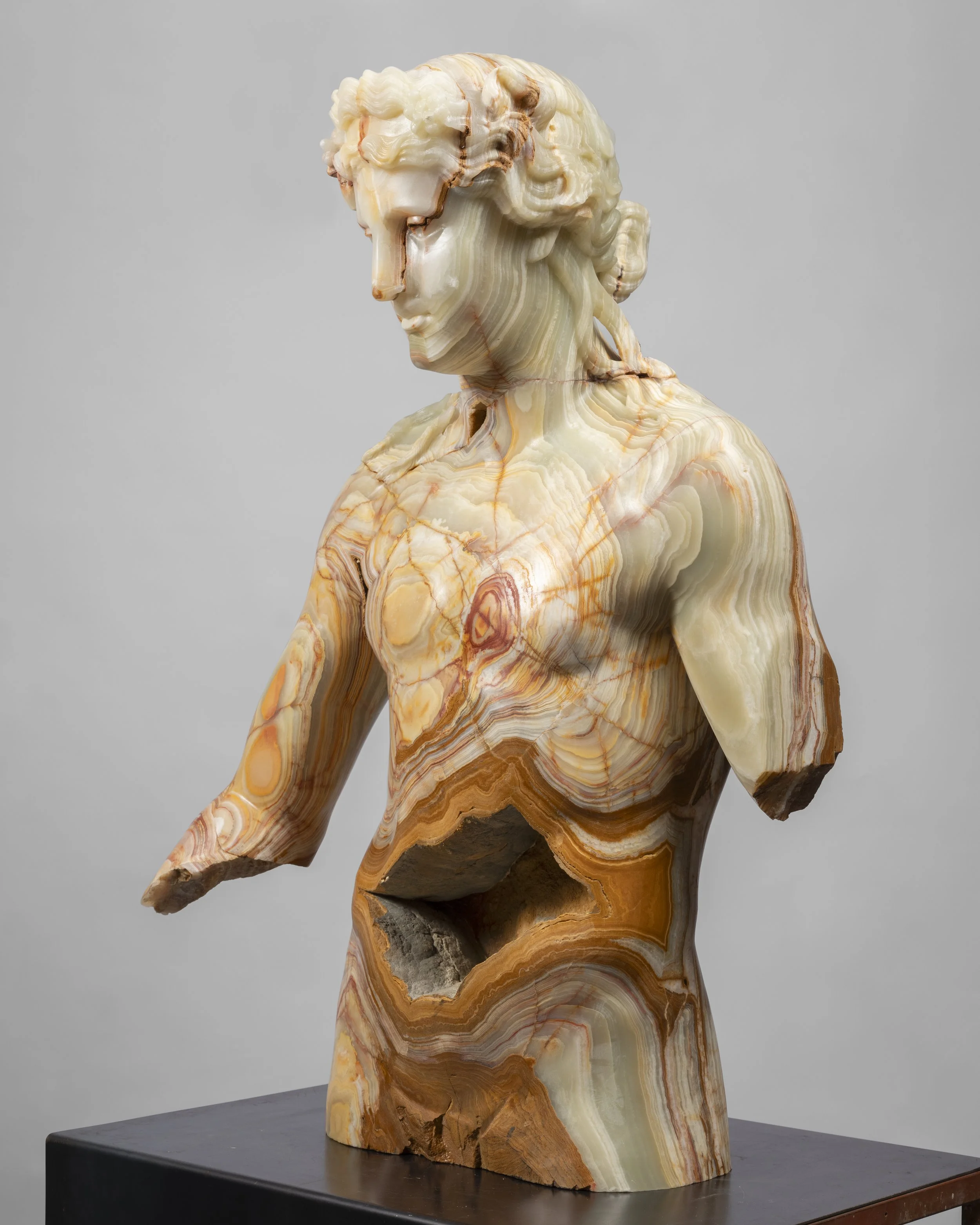
Pelletti’s work occupies a delicate space between reverence and transformation. His sculptures echo the timeless forms of antiquity—busts, mythological figures, fragments of classical bodies—yet they are disrupted by the unpredictable geology of the stone itself. Veins of onyx split faces in half, cavities emerge where perfection might once have existed, and ancient forms appear as though excavated from time rather than carved in the present.
Rather than hiding imperfections, Pelletti embraces them. Each fissure, fracture, and mineral variation becomes a collaborator in the final form. The result is sculpture that feels both ancient and newly discovered, where the material itself becomes a co-author of the work.
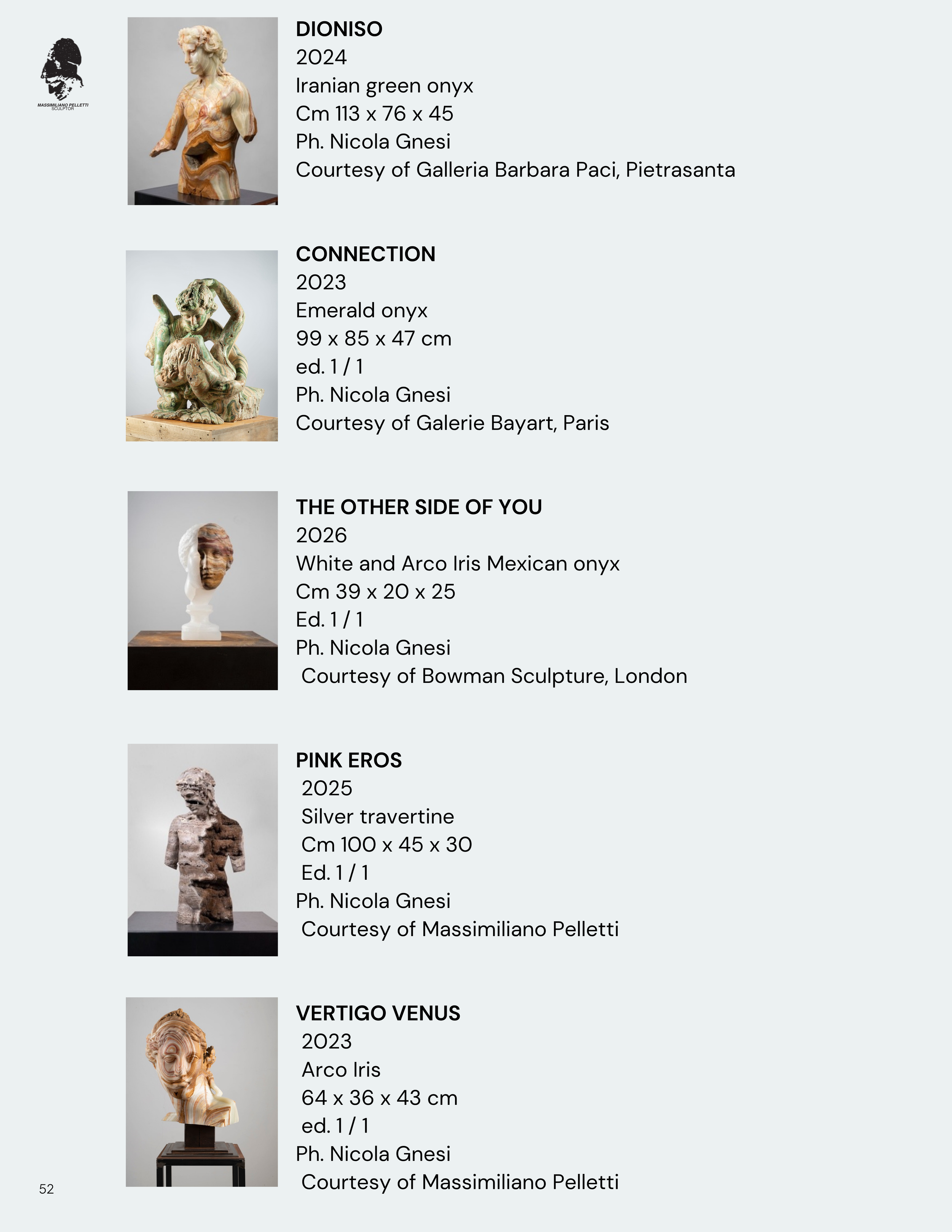
Many of Pelletti’s recent pieces—including Dioniso, Connection, Vertigo Venus, and The Other Side of You—explore this dialogue between control and surrender, allowing the geological history of the stone to guide the emergence of the figure.
The effect is poetic: classical figures appear fragmented not by damage but by time, as if the past itself had carved them.
Interview
THE NOUN:You began working with marble as a child in your family workshop in Pietrasanta. What did you learn early on that still guides your hands today?
MASSIMILIANO:
Ho iniziato nel laboratorio di mio nonno giocando con la creta e ho avuto quindi la fortuna di appassionarmi a questo lavoro come un gioco. La cosa che mi è rimasta è il divertimento del fare che toglie ogni tipo di fatica e sacrificio.
I started out in my grandfather's studio, playing with clay, and was lucky enough to develop a passion for this work as if it were a game. What has stayed with me is the enjoyment of creating, which takes away all sense of effort and sacrifice.
THE NOUN: Much of the narrative around creative careers centers on artists having to justify their path to their families. You, however, were raised in a family deeply rooted in marble craftsmanship. Many imagine that growing up in a creative household would ease the path. From your perspective, what were the privileges and challenges of inheriting a craft?
Massimiliano:
Crescere in un ambiente creativo facilita il percorso perché genera automaticamente l’idea che tale percorso sia possibile. In realtà, nel momento in cui ho espresso la volontà di fare l’artista, i miei familiari mi sconsigliarono di seguire questo percorso perché il lavoro dello scultore era un lavoro molto duro fatto di grandi sacrifici e che si svolgeva all’interno di vecchi laboratori molto freddi in inverno e molto caldi in estate con un rapporto fisico nei confronti della materia che metteva duramente alla prova.
Growing up in a creative environment facilitates the path because it automatically generates the idea that such a path is possible. In reality, when I expressed my desire to become an artist, my family advised me against pursuing this path because the work of a sculptor was very hard, requiring great sacrifice and taking place in old workshops that were very cold in winter and very hot in summer, with a physical relationship with the material that was extremely demanding.
THE NOUN:You were trained in classical technique from an early age. At what point did you begin to recognize a personal language emerging within your work? Was there a specific moment when you felt that shift from technique to identity?
Massimiliano:
Si, ho studiato la tecnica nello studio di mio nonno e successivamente al liceo artistico. Terminati questi studi decisi di non andare all’accademia di belle arti ma di intraprendere la facoltà di Filosofia presso l’università di Pisa. Fu una scelta dettata dal fatto che oltre a sviluppare la tecnica, volevo un’apertura mentale per riuscire a sviluppare un mio linguaggio e ricordo benissimo quando in un’estate molto calda durante un esame di bioetica nacque in me l’esigenza di creare qualcosa di personale.
Yes, I studied the technique in my grandfather's studio and later at art school. After completing these studies, I decided not to go to art school but to study philosophy at the University of Pisa. This choice was dictated by the fact that, in addition to developing my technique, I wanted to open my mind in order to develop my own language. I remember very well when, during a very hot summer, while taking an exam in bioethics, I felt the need to create something personal.
THE NOUN: Your sculptures balance precision with natural unpredictability. At what point in the process do you decide how much control to keep—and how much to surrender to the material?
Massimiliano:
Le mie opere nascono sempre dalla materia. È la materia stessa che suggerisce il soggetto che ne uscirà dal suo interno. La mia azione scultorea è sempre un compromesso tra ciò che voglio realizzare e ciò che il materiale mi permette. La mia vocazione è trasformare il difetto presente sulla materia in un pregio nell’ opera con un perfetto equilibrio tale da generare poesia in chi guarda.
My works always originate from the material itself. It is the material that suggests the subject that will emerge from within it. My sculptural work is always a compromise between what I want to achieve and what the material allows me to do. My vocation is to transform the flaws in the material into qualities in the work, with a perfect balance that generates poetry in the viewer.
THE NOUN: How does the intended environment—a gallery, museum, private residence, or hotel—influence a work's scale or composition?
Massimiliano:
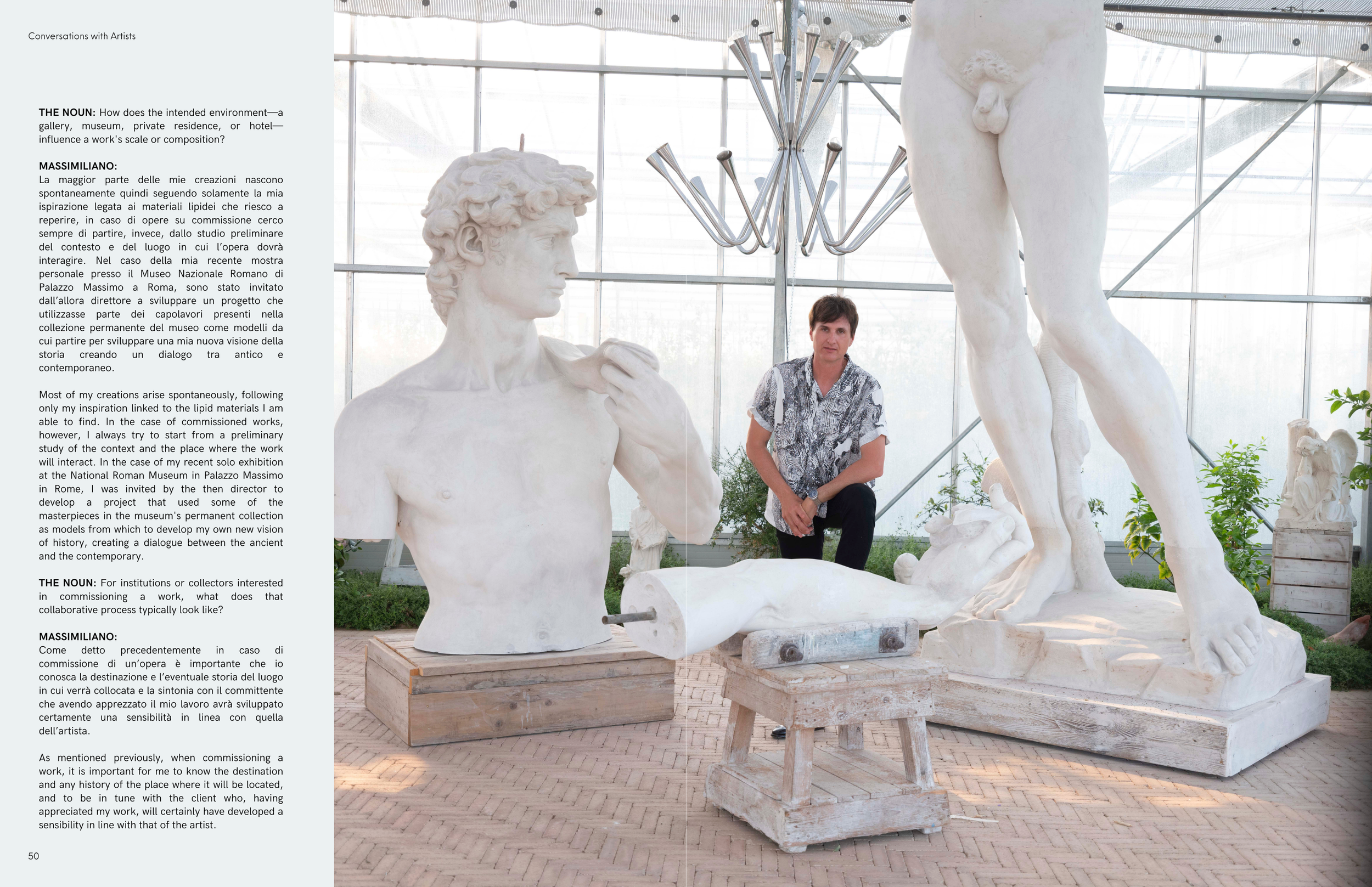
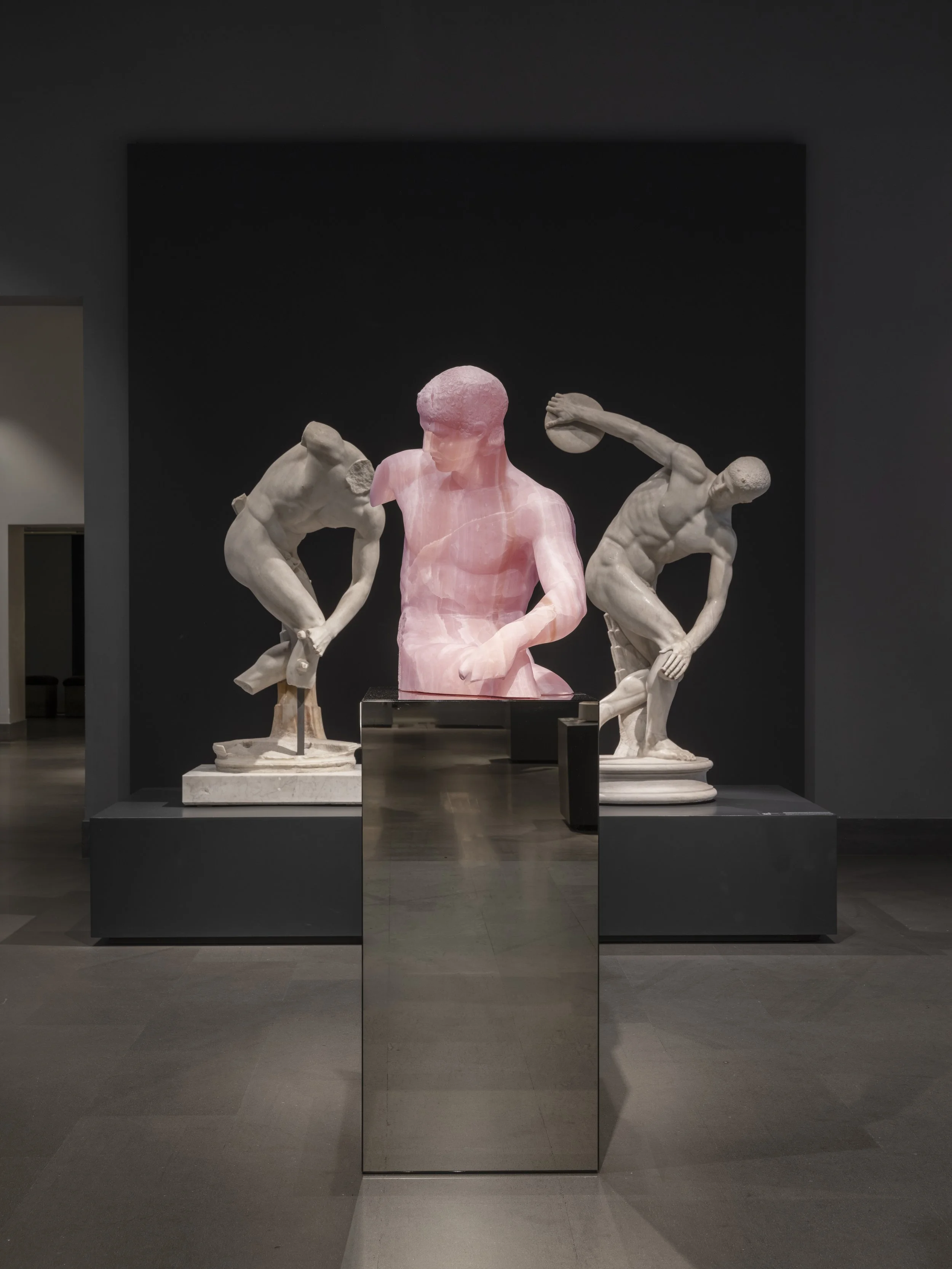
La maggior parte delle mie creazioni nascono spontaneamente quindi seguendo solamente la mia ispirazione legata ai materiali lipidei che riesco a reperire, in caso di opere su commissione cerco sempre di partire, invece, dallo studio preliminare del contesto e del luogo in cui l’opera dovrà interagire. Nel caso della mia recente mostra personale presso il Museo Nazionale Romano di Palazzo Massimo a Roma, sono stato invitato dall’allora direttore a sviluppare un progetto che utilizzasse parte dei capolavori presenti nella collezione permanente del museo come modelli da cui partire per sviluppare una mia nuova visione della storia creando un dialogo tra antico e contemporaneo.
Most of my creations arise spontaneously, following only my inspiration linked to the lipid materials I am able to find. In the case of commissioned works, however, I always try to start from a preliminary study of the context and the place where the work will interact. In the case of my recent solo exhibition at the National Roman Museum in Palazzo Massimo in Rome, I was invited by the then director to develop a project that used some of the masterpieces in the museum's permanent collection as models from which to develop my own new vision of history, creating a dialogue between the ancient and the contemporary.
THE NOUN: For institutions or collectors interested in commissioning a work, what does that collaborative process typically look like?
Massimiliano:
Come detto precedentemente in caso di commissione di un’opera è importante che io conosca la destinazione e l’eventuale storia del luogo in cui verrà collocata e la sintonia con il committente che avendo apprezzato il mio lavoro avrà sviluppato certamente una sensibilità in linea con quella dell’artista.
As mentioned previously, when commissioning a work, it is important for me to know the destination and any history of the place where it will be located, and to be in tune with the client who, having appreciated my work, will certainly have developed a sensibility in line with that of the artist.
Contact
Massimiliano Pelletti
Pietrasanta, Italy
Instagram: instagram.com/massimiliano_pelletti/
Website: massimilianopelletti.com
For inquiries and commissions:
Contact via website or through associated galleries.
Represented by:
Galleria Barbara Paci — Pietrasanta
Galerie Bayart — Paris Bowman
Sculpture — London
Massimiliano Pelletti interview in The Noun No. 001—The Archivist editorial spread below.
Access the full issue here.